Sarcoidosis Treatment in Vienna VA
Sarcoidosis is an inflammatory condition that can affect several organs in the body, but it most commonly involves the lungs and lymph nodes in the chest. The condition causes clusters of inflammatory cells called granulomas to develop in affected tissues. For some people, sarcoidosis causes few or no symptoms, while others may experience persistent respiratory symptoms or progressive lung problems that require treatment and ongoing monitoring.
At NOVA Pulmonary Critical Care and Sleep Associates, our pulmonary specialists provide sarcoidosis evaluation and treatment in Vienna, VA. We evaluate pulmonary symptoms, imaging findings, lung function, and other health factors to develop an individualized approach to managing sarcoidosis and monitoring its effects on the lungs.
NOVA Pulmonary Critical Care and Sleep Associates
📍 Vienna Office
124 Park Street SE, Suite 203
Vienna, VA 22180
Map it
📞 571-367-0000
Office Hours:
Mon – Fri: 9:00AM – 5:00PM
Sat & Sun: Closed
What Is Sarcoidosis?
Sarcoidosis develops when the immune system forms small clusters of inflammatory cells known as granulomas. These granulomas can develop in many parts of the body, including the lungs, lymph nodes, skin, eyes, heart, and nervous system.
The lungs and lymph nodes within the chest are among the most commonly affected areas. Pulmonary sarcoidosis may cause inflammation within the lungs and, in some patients, can eventually contribute to permanent lung scarring or pulmonary fibrosis.
Symptoms of Pulmonary Sarcoidosis
Sarcoidosis symptoms vary considerably from one person to another. Some people have abnormalities on a chest X-ray or CT scan without noticeable respiratory symptoms.
When sarcoidosis affects the lungs, symptoms may include:
✓ Persistent dry cough
✓ Shortness of breath
✓ Wheezing
✓ Chest discomfort or pain
✓ Fatigue
✓ Reduced exercise tolerance
Sarcoidosis can also produce symptoms outside the lungs, including fever, swollen lymph nodes, skin changes, joint discomfort, eye irritation, and vision problems.
How Is Sarcoidosis Diagnosed?
There is no single routine test that establishes sarcoidosis in every patient. Because its symptoms and imaging findings can resemble other diseases, evaluation generally involves ruling out other possible causes while looking for findings consistent with sarcoidosis.
Diagnostic evaluation may include:
✓ Medical history and physical examination
✓ Chest X-ray
✓ Chest CT scan
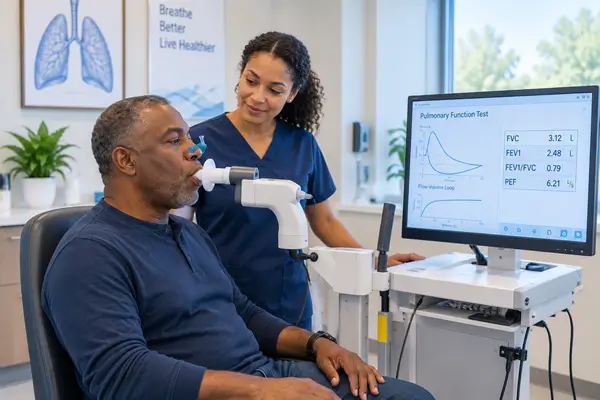
✓ Pulmonary function testing
✓ Blood and urine testing
✓ Oxygen level assessment
✓ Eye examination when appropriate
✓ Heart testing when clinically indicated
✓ Tissue biopsy in selected patients
When tissue confirmation is needed, bronchoscopy may sometimes be used to obtain samples from the lungs or lymph nodes in the chest.
Chest X-Ray and CT Evaluation for Sarcoidosis
Chest imaging plays an important role in evaluating pulmonary sarcoidosis.
A chest X-ray may show enlarged lymph nodes, granulomas, or evidence of lung scarring. A chest CT provides more detailed images and may help physicians evaluate abnormalities within the lung tissue and lymph nodes.
Imaging findings are interpreted together with your symptoms, examination, pulmonary function, and other testing rather than being used alone to determine treatment.
Pulmonary Function Testing for Sarcoidosis
Pulmonary function tests measure how effectively your lungs are working. They can help determine whether sarcoidosis is affecting airflow, lung volumes, or the ability of the lungs to transfer oxygen.
Pulmonary function testing can also be useful for monitoring changes over time and evaluating how the lungs respond to treatment.
Does Everyone With Sarcoidosis Need Treatment?
No. Some patients with sarcoidosis have mild disease that improves or remains stable without medication.
The decision to begin treatment depends on factors such as the severity of symptoms, which organs are involved, whether lung function is being affected, and whether there is evidence that the disease is progressing.
Even when medication is not necessary, continued medical monitoring may be recommended.
Sarcoidosis Treatment in Vienna, VA
When sarcoidosis requires treatment, the goal is generally to control inflammation, reduce symptoms, preserve organ function, and decrease the risk of complications.
Treatment is individualized and may include:
✓ Corticosteroid medication
✓ Other medications that modify the immune response
✓ Treatment of respiratory symptoms
✓ Oxygen therapy for selected patients with significant lung involvement
✓ Pulmonary rehabilitation when appropriate
✓ Monitoring with pulmonary function tests and imaging
✓ Coordination with other specialists when organs outside the lungs are involved
Your physician will determine whether treatment is necessary and which approach is most appropriate based on the extent and activity of your disease.
Corticosteroids for Sarcoidosis
Corticosteroids such as prednisone are commonly used when sarcoidosis requires treatment. These medications help reduce inflammation and suppress an excessive immune response.
Because corticosteroids can cause significant side effects, particularly when taken at higher doses or for extended periods, physicians generally consider both the potential benefits and risks of treatment.
Other Medications for Sarcoidosis
Some patients require additional medications when corticosteroids do not adequately control the disease, cause significant side effects, or would otherwise need to be used for an extended period.
Depending on the clinical situation, physicians may consider medications that reduce or modify immune system activity. Examples include methotrexate and other immunomodulating therapies. Treatment decisions depend on disease severity, the organs affected, other medical conditions, and response to previous therapy.
Monitoring Pulmonary Sarcoidosis
Ongoing monitoring can be an important part of sarcoidosis care, even for patients who do not currently require medication.
Follow-up may include:
✓ Review of respiratory symptoms
✓ Pulmonary function testing
✓ Oxygen assessment
✓ Chest imaging when appropriate
✓ Laboratory testing
✓ Monitoring for medication side effects
✓ Evaluation for involvement of other organs
Changes in symptoms or lung function can help your physician determine whether the disease is stable or whether treatment should be adjusted.
Sarcoidosis and Pulmonary Fibrosis
In some patients, chronic inflammation from pulmonary sarcoidosis can result in permanent scarring of the lung tissue, known as pulmonary fibrosis.
Scarring can make the lungs stiffer and interfere with normal breathing and oxygen exchange. Patients with significant pulmonary involvement may therefore require closer monitoring of lung function and oxygen levels.
Sarcoidosis Can Affect More Than the Lungs
Although pulmonary specialists frequently manage sarcoidosis because of its effects on the lungs, the disease can involve other organs.
Sarcoidosis may affect the:
✓ Eyes
✓ Skin
✓ Heart
✓ Liver
✓ Spleen
✓ Joints
✓ Nervous system
When symptoms or testing suggest involvement outside the lungs, care may need to be coordinated with ophthalmologists, cardiologists, rheumatologists, neurologists, or other specialists.
Sarcoidosis and Eye Health
Sarcoidosis can affect the eyes and may occasionally cause problems even when noticeable eye symptoms are absent. Eye examinations may therefore be included as part of the evaluation of patients diagnosed with sarcoidosis.
Patients should tell their healthcare provider about symptoms such as eye redness, discomfort, sensitivity to light, blurred vision, or other changes in vision.
Sarcoidosis and the Heart
Cardiac sarcoidosis is less common than pulmonary involvement but can be serious. Depending on symptoms and clinical findings, physicians may recommend heart testing such as an electrocardiogram, echocardiogram, or cardiac MRI.
Symptoms such as unexplained palpitations, fainting, significant dizziness, chest discomfort, or worsening shortness of breath should be discussed with your healthcare provider.
Living With Pulmonary Sarcoidosis
Many people with sarcoidosis can continue normal activities, although symptoms and the course of the condition vary considerably among patients.
Regular follow-up allows your physician to monitor your respiratory health, evaluate changes in symptoms, assess treatment response, and identify potential complications.
Patients should also discuss smoking cessation, appropriate physical activity, vaccinations, nutrition, and other measures that may help support overall lung health with their healthcare provider.
When Should You See a Pulmonologist?
A pulmonary evaluation may be appropriate if you:
✓ Have been diagnosed with pulmonary sarcoidosis
✓ Have an abnormal chest X-ray or CT scan suggestive of sarcoidosis
✓ Have enlarged lymph nodes within the chest
✓ Experience persistent cough or shortness of breath
✓ Need pulmonary function testing
✓ Have been referred for possible bronchoscopy or biopsy
✓ Need ongoing monitoring of pulmonary sarcoidosis
✓ Have worsening respiratory symptoms despite treatment
A pulmonologist can help determine how extensively sarcoidosis is affecting the lungs and whether treatment or continued monitoring is appropriate.
Sarcoidosis Care in Vienna, Virginia
NOVA Pulmonary Critical Care and Sleep Associates provides comprehensive pulmonary care for patients with sarcoidosis and other conditions affecting the lungs.
Our pulmonary specialists evaluate and manage conditions including pulmonary sarcoidosis, pulmonary fibrosis, interstitial lung disease, bronchiectasis, COPD, emphysema, pulmonary hypertension, recurrent pneumonia, pleural effusion, abnormal chest imaging, and other respiratory disorders.
Schedule a Sarcoidosis Evaluation in Vienna, VA
If you have been diagnosed with sarcoidosis, have abnormal chest imaging, or are experiencing respiratory symptoms that require further evaluation, appropriate pulmonary care can help determine how your lungs are being affected and whether treatment or ongoing monitoring is needed.
Contact NOVA Pulmonary Critical Care and Sleep Associates to schedule a sarcoidosis evaluation and treatment consultation in Vienna, VA.
Directions & Parking Information
Our Vienna office is located on Park Street SE near the Vienna Community Center and historic downtown Vienna.
Free parking available near the building
Elevator access to Suite 203
Easily accessible from Route 123 and I-66
Minutes from Tysons Corner
If you need assistance locating our office, please call and our staff will guide you.
Frequently Asked Questions
Is sarcoidosis a lung disease?
Sarcoidosis can affect many organs, but the lungs and lymph nodes in the chest are among the most commonly affected areas. Pulmonary sarcoidosis may cause cough, shortness of breath, wheezing, and other respiratory symptoms.
Does sarcoidosis always require treatment?
No. Some people have mild or stable sarcoidosis and may not require medication. Treatment depends on symptoms, organ involvement, lung function, and whether the disease is progressing.
How is pulmonary sarcoidosis diagnosed?
Evaluation may include chest X-rays, CT imaging, pulmonary function testing, blood tests, and other studies. In some patients, a tissue biopsy may be needed to help confirm the diagnosis and rule out other conditions.
Can sarcoidosis cause permanent lung damage?
In some patients, pulmonary sarcoidosis can lead to permanent lung scarring, or pulmonary fibrosis. However, the course of sarcoidosis varies considerably from person to person.
What medications are used to treat sarcoidosis?
Corticosteroids such as prednisone are commonly used when treatment is necessary. Other medications that modify the immune response may be considered depending on the severity of the disease and response to treatment.
Can sarcoidosis affect organs other than the lungs?
Yes. Sarcoidosis can affect the eyes, skin, heart, nervous system, liver, and other organs. Patients may need care from additional specialists depending on which organs are involved.
How is pulmonary sarcoidosis monitored?
Monitoring may include follow-up visits, review of symptoms, pulmonary function testing, oxygen assessment, chest imaging, and laboratory testing when appropriate.
Where can I receive sarcoidosis treatment in Vienna, VA?
NOVA Pulmonary Critical Care and Sleep Associates provides evaluation, treatment, and ongoing pulmonary care for patients with sarcoidosis in Vienna, VA and surrounding Northern Virginia communities.
Office Locations
Conveniently located near you in Dulles, Leesburg, (Loudoun County) and Vienna, (Fairfax County), VA
NOVA Pulmonary – Dulles
24430 Stone Springs Boulevard
Suite 550
Dulles, VA 20166
NOVA Pulmonary – Lansdowne
19415 Deerfield Avenue
Suite 301
Lansdowne, VA 20176
NOVA Pulmonary Critical Care and Sleep Associates is committed to providing excellent care in all aspects of Pulmonary Medicine and Sleep Disorders. With offices located in Lansdowne and Dulles, South Riding, we offer care for the entire Northern Virginia region, serving locations from Chantilly, Fairfax, Vienna, Centreville, Manassas, Gainesville to Reston, Sterling, Leesburg, Ashburn, Brambleton, Purcellville and more.
Meet the team at NOVA Pulmonary Critical Care and Sleep Associates

Dr. Aditya N Dubey, M.D, F.C.C.P. – Founder
Specialty:
Pulmonary, Critical Care and Sleep Medicine
Board Certified by American Board of Internal Medicine in the Subspecialities of Pulmonary Medicine, Critical Care Medicine and Sleep Medicine. Learn more about Dr. Dubey

Dr. Petra Thomas, M.D.
Specialty:
Pulmonary Medicine
Board Certified by American Board of Internal Medicine in the Subspecialities of Pulmonary Medicine. Learn more about Dr. Thomas

Dr. Esha Kapania, M.D.
Specialty:
Pulmonary Medicine
Board Certified by American Board of Internal Medicine in the Subspecialities of Pulmonary Medicine. Learn more about Dr. Kapania

Dr. Arman Murabia, M.D.
Specialty:
Pulmonary, Critical Care and Sleep Medicine
Board Certified by American Board of Internal Medicine in the Subspecialities of Pulmonary Medicine, Critical Care Medicine and Sleep Medicine. Learn more about Dr. Murabia

Dr. Zara Martirosyan, MD
Specialty:
Sleep Medicine & Internal Medicine Specialist
Board-certified physician in both Sleep medicine and Internal medicine. Learn more about Dr. Martirosyan

Rebekah Lee, AGNP-C, Lead APP
Nurse Practitioner. Learn more about Rebekah Lee

Paulos Abebe PA-C
Physician Assistant Learn more about Paulos Abebe PA-C

Katie Cameron, PA
Physician Assistant Learn more about Katie Cameron, PA-C