
Insomnia Evaluation, Vienna, VA
Difficulty falling asleep, waking frequently during the night, or waking earlier than planned can leave you feeling exhausted and unfocused the next day. While occasional sleeplessness is common, persistent difficulty sleeping may be a sign of insomnia or another sleep disorder that should be professionally evaluated.
NOVA Pulmonary Critical Care and Sleep Associates provides comprehensive insomnia evaluations in Vienna, Virginia. Our sleep medicine specialists carefully assess your symptoms, sleep habits, medical history, medications, daily schedule, and possible contributing conditions to determine what may be interfering with your sleep.
If you have been searching for an “insomnia specialist near me,” “insomnia testing in Vienna,” or an experienced sleep doctor in Vienna, NOVA Pulmonary offers personalized sleep evaluations close to home.
NOVA Pulmonary Critical Care and Sleep Associates
📍 Vienna Office
124 Park Street SE, Suite 203
Vienna, VA 22180
Map it
📞 571-367-0000
Office Hours:
Mon – Fri: 9:00AM – 5:00PM
Sat & Sun: Closed
Schedule an Insomnia Evaluation
When Should You Schedule an Insomnia Evaluation?
Many people experience a restless night from time to time. However, a professional sleep evaluation may be appropriate when sleep difficulties continue, happen repeatedly, or begin interfering with your health and daily activities.
Consider scheduling an insomnia evaluation if you regularly experience:
- Difficulty falling asleep
- Frequent awakenings during the night
- Difficulty returning to sleep after waking
- Waking earlier than intended
- Feeling unrefreshed after sleeping
- Daytime fatigue or low energy
- Problems concentrating or remembering information
- Irritability or changes in mood
- Worry or anxiety about being unable to sleep
- Reduced performance at work or school
- Dependence on over-the-counter sleep aids
- Sleep difficulties that have continued for several weeks or months
You should also discuss your symptoms with a sleep specialist when difficulty sleeping occurs along with loud snoring, gasping, choking, unusual nighttime movements, restless legs, or excessive daytime sleepiness. These symptoms may indicate that another sleep disorder is contributing to your disrupted sleep.
What Is an Insomnia Evaluation?
An insomnia evaluation is a detailed assessment used to understand your sleep difficulties and identify possible contributing factors. Unlike some medical conditions, insomnia is not usually diagnosed through one single laboratory test.
Your sleep specialist will look at the complete pattern of your sleep, including when your symptoms began, how often they occur, how they affect you during the day, and whether another medical or sleep condition may be involved.
The evaluation may include:
- A detailed discussion of your sleep concerns
- Review of your bedtime and wake-up schedule
- Assessment of nighttime awakenings
- Review of daytime fatigue and sleepiness
- Medical and family history
- Medication and supplement review
- Evaluation of caffeine, nicotine, and alcohol use
- Screening for sleep apnea and other sleep disorders
- Physical examination when appropriate
- Sleep questionnaires
- Review of a sleep diary
- Additional diagnostic testing when medically indicated
The goal is not simply to confirm that you are having trouble sleeping. The goal is to understand why the problem may be happening and determine the most appropriate next steps.
Is There a Test for Insomnia?
There is no single blood test, scan, or overnight test that diagnoses every case of insomnia. Insomnia is generally identified through a clinical evaluation of your symptoms, sleep schedule, health history, and daytime functioning.
Your sleep specialist may ask questions such as:
- How long does it usually take you to fall asleep?
- How many times do you wake during the night?
- How long are you awake after nighttime awakenings?
- What time do you usually go to bed and wake up?
- Does your sleep schedule change on weekends?
- Do you take naps during the day?
- Do you feel sleepy or fatigued during daytime activities?
- Do you snore, gasp, or stop breathing while asleep?
- Do you experience uncomfortable sensations in your legs?
- Do you work overnight or rotating shifts?
- Do you use phones, tablets, computers, or television before bed?
- What medications, supplements, or sleep aids do you take?
Your answers help your provider distinguish insomnia from insufficient sleep, an irregular sleep schedule, sleep apnea, restless legs syndrome, circadian rhythm disorders, narcolepsy, medication effects, and other possible causes of poor sleep.
Keeping a Sleep Diary Before Your Appointment
Your provider may recommend keeping a sleep diary for one or two weeks before or after your first appointment. A sleep diary creates a clearer picture of your sleep patterns and daily habits.
You may be asked to record:
- The time you go to bed
- The approximate time you fall asleep
- How often you wake during the night
- How long you remain awake
- Your morning wake-up time
- The time you get out of bed
- Daytime naps
- Caffeine and alcohol consumption
- Exercise
- Medications or sleep aids
- Your daytime energy and alertness
- How rested you feel in the morning
Try to complete the diary consistently without becoming overly focused on the clock. The purpose is to identify general patterns that may help your sleep specialist understand your symptoms.
Bring the completed sleep diary to your appointment so it can be reviewed as part of your insomnia evaluation.
What Can Cause Insomnia Symptoms?
Insomnia symptoms may develop for many different reasons. In some cases, several factors contribute to the problem at the same time.
Possible contributing factors include:
Stress and Changes in Routine
Work demands, family responsibilities, travel, major life events, and changes in daily routine can interfere with the body’s normal sleep-wake pattern.
Irregular Sleep Schedules
Frequently changing your bedtime, sleeping late on weekends, taking long naps, or working rotating shifts may make it difficult for your body to maintain a consistent sleep schedule.
Medical Conditions
Chronic pain, breathing problems, acid reflux, thyroid disorders, menopause-related symptoms, and other medical conditions may interfere with falling asleep or staying asleep.
Medications and Supplements
Certain prescription medications, over-the-counter products, stimulants, decongestants, and supplements can affect sleep. Your sleep specialist will review what you take and when you take it.
Caffeine, Nicotine and Alcohol
Caffeine and nicotine can make it harder to fall asleep. Although alcohol may initially cause drowsiness, it can contribute to fragmented or poor-quality sleep later in the night.
Other Sleep Disorders
Sleep apnea, restless legs syndrome, periodic limb movements, circadian rhythm disorders, narcolepsy, and other sleep conditions may produce symptoms that resemble or worsen insomnia.
A detailed evaluation helps determine whether your sleep difficulty is related to insomnia, another sleep disorder, or a combination of conditions.
Do You Need a Sleep Study for Insomnia?
Not everyone with insomnia needs an overnight sleep study. Many cases can be evaluated through a detailed sleep history, medical history, sleep diary, and clinical examination.
However, additional sleep testing may be recommended when your symptoms suggest another sleep disorder.
Your provider may consider a sleep study if you experience:
- Loud or frequent snoring
- Witnessed pauses in breathing
- Gasping or choking during sleep
- Significant daytime sleepiness
- Morning headaches
- Frequent nighttime urination
- Unusual movements or behaviors while sleeping
- Restless or uncomfortable sensations in your legs
- Sudden episodes of falling asleep
- An irregular sleep-wake schedule
- Insomnia that has not improved with previous care
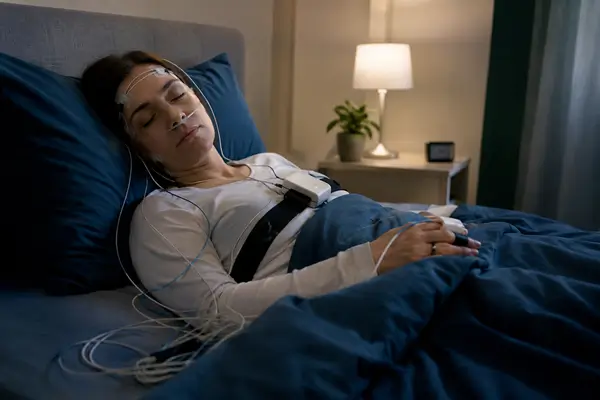
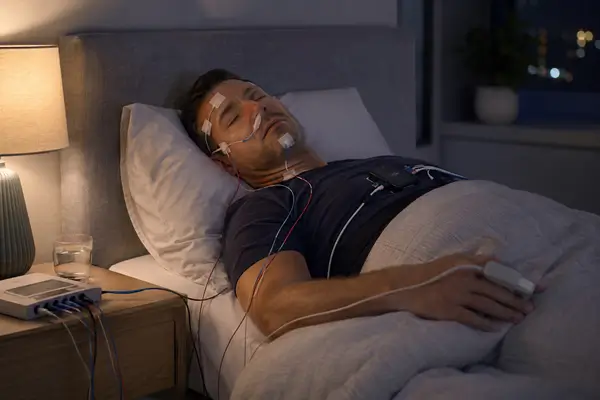
Depending on your symptoms and medical history, your sleep specialist may recommend a home sleep apnea test, an overnight in-lab sleep study, or another appropriate diagnostic evaluation.
A home sleep apnea test is designed to evaluate suspected obstructive sleep apnea. It does not diagnose insomnia itself. Your provider will determine which type of evaluation, if any, is appropriate for you.
Insomnia or Sleep Apnea?
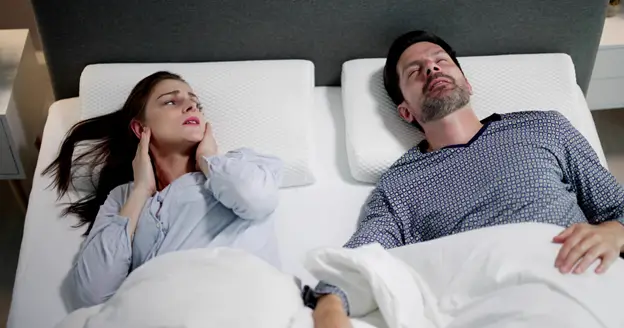
Sleep apnea and insomnia are different sleep disorders, but their symptoms can overlap. Sleep apnea causes repeated interruptions in breathing that may lead to brief awakenings throughout the night.
A person with sleep apnea may believe that insomnia is causing the awakenings, especially when they are unaware of their snoring or breathing interruptions.
Possible warning signs of sleep apnea include:
- Loud snoring
- Gasping or choking during sleep
- Witnessed pauses in breathing
- Dry mouth upon awakening
- Morning headaches
- Frequent nighttime awakenings
- Unrefreshing sleep
- Daytime fatigue or sleepiness
- Difficulty concentrating
- Irritability
Some patients experience both insomnia and sleep apnea. This is one reason a comprehensive sleep evaluation is important. Treating only one part of the problem may not fully improve sleep when more than one condition is present.
Acute and Chronic Insomnia
Sleep specialists may consider how long your symptoms have been occurring and how frequently they affect you.
Short-Term Insomnia
Short-term or acute insomnia may occur during periods of stress, illness, travel, grief, changes in routine, or other temporary circumstances. It may last for several nights or weeks.
Chronic Insomnia
Chronic insomnia generally involves difficulty falling asleep, staying asleep, or obtaining refreshing sleep at least three nights per week for three months or longer. It is also associated with daytime symptoms such as fatigue, poor concentration, irritability, or reduced functioning.
Insomnia that begins during a stressful period can sometimes continue after the original situation has improved. A sleep evaluation can help identify the habits, schedules, medical conditions, or thought patterns that may be maintaining the sleep difficulty.
What Happens After Your Insomnia Evaluation?
After reviewing your symptoms, sleep patterns, medical history, and any necessary test results, your provider will discuss the findings with you.
Your next steps may include:
- Additional sleep tracking
- Changes to your sleep schedule
- Behavioral sleep recommendations
- Cognitive behavioral therapy for insomnia
- Evaluation for sleep apnea
- Home or in-lab sleep testing
- Review or adjustment of medications
- Treatment of another sleep disorder
- Coordination with another healthcare provider
- Follow-up sleep medicine appointments
For detailed information about treatment options, visit our page about insomnia treatment in Vienna, VA.
Your recommendations will depend on your symptoms, health history, test results, and individual needs.
What to Expect at Your First Appointment
Your first insomnia appointment will focus on understanding your symptoms and overall sleep pattern.
The appointment may include:
- A review of your primary sleep concerns
- Discussion of when your symptoms began
- Review of your bedtime and wake-up schedule
- Assessment of daytime fatigue or sleepiness
- Review of medications, supplements, caffeine, and alcohol
- Screening for sleep apnea and other sleep disorders
- Review of medical conditions that may affect sleep
- A physical examination when appropriate
- Recommendations for a sleep diary or diagnostic testing
- Discussion of appropriate next steps
Bring a current list of your prescription medications, over-the-counter products, and supplements. Previous sleep-study results and other relevant medical records may also be helpful.
A spouse or bed partner may notice snoring, breathing interruptions, movements, or behaviors that you do not remember. Information from a bed partner can be valuable during the evaluation.
Why Choose NOVA Pulmonary for an Insomnia Evaluation?
NOVA Pulmonary Critical Care and Sleep Associates provides comprehensive sleep medicine care for patients experiencing insomnia and other sleep disorders.
Patients choose our Vienna sleep specialists for:
- Comprehensive sleep evaluations
- Experienced sleep medicine providers
- Screening for sleep apnea and related conditions
- Home and in-lab sleep testing when appropriate
- Personalized recommendations
- Convenient appointment scheduling
- Coordinated pulmonary and sleep medicine care
- A convenient Vienna location
- Care for patients throughout Northern Virginia
Our team evaluates the complete picture of your sleep health rather than focusing only on one symptom.
Insomnia Evaluations Near Tysons, McLean, Oakton and Fairfax
Our Vienna sleep medicine office is located on Park Street SE near downtown Vienna and the Vienna Community Center.
We provide insomnia evaluations for patients from:
- Vienna
- Tysons
- McLean
- Oakton
- Dunn Loring
- Merrifield
- Falls Church
- Fairfax
- Reston
- Annandale
- Burke
- Centreville
- Other Northern Virginia communities
The office is accessible from Route 123, Nutley Street, I-66, and surrounding Fairfax County communities.
Schedule an Insomnia Evaluation in Vienna, VA
You do not have to continue struggling with sleepless nights without understanding why they are happening. If difficulty falling asleep, nighttime awakenings, early morning waking, or unrefreshing sleep is affecting your daily life, schedule an evaluation with NOVA Pulmonary Critical Care and Sleep Associates.
Our Vienna sleep medicine team will review your symptoms, evaluate possible causes, and help determine the appropriate next steps.
Frequently Asked Questions About Insomnia Evaluations
Do you provide insomnia evaluations in Vienna, VA?
Yes. NOVA Pulmonary Critical Care and Sleep Associates provides comprehensive insomnia evaluations at its Vienna office. The evaluation may include a review of your symptoms, sleep schedule, medical history, medications, daytime functioning, and possible signs of another sleep disorder.
Is insomnia evaluation the same as insomnia treatment?
No. An insomnia evaluation is the process of identifying your sleep pattern, possible causes, and contributing conditions. Treatment begins after your provider has reviewed the evaluation findings and determined which options are appropriate.
Is there a specific medical test for insomnia?
There is no single laboratory test that diagnoses every case of insomnia. Diagnosis is generally based on your symptoms, sleep history, daytime functioning, medical history, and sleep schedule. Additional testing may be recommended when another sleep disorder is suspected.
Will I need an overnight sleep study?
Not necessarily. Many patients do not need an overnight sleep study solely for insomnia. A sleep study may be recommended when symptoms suggest sleep apnea, unusual nighttime movements, narcolepsy, a circadian rhythm disorder, or another condition.
Can a home sleep test diagnose insomnia?
No. A home sleep test is primarily used to evaluate suspected obstructive sleep apnea. It does not directly diagnose insomnia, but it may help determine whether breathing interruptions are contributing to poor sleep.
What should I bring to my insomnia appointment?
Bring a list of your medications and supplements, previous sleep-study results, relevant medical records, and a completed sleep diary if one was requested. Information from a spouse or bed partner about snoring, breathing pauses, or nighttime movements may also be useful.
How long should I keep a sleep diary?
Your provider may ask you to keep a sleep diary for approximately one or two weeks. Record your bedtime, estimated sleep time, awakenings, wake-up time, naps, caffeine or alcohol use, and daytime symptoms.
Can sleep apnea cause symptoms that feel like insomnia?
Yes. Sleep apnea can cause repeated awakenings and fragmented sleep. Some people with sleep apnea primarily notice difficulty staying asleep, daytime fatigue, or unrefreshing sleep rather than recognizing breathing interruptions.
When should I see a sleep specialist?
Consider seeing a sleep specialist when your difficulty sleeping occurs regularly, continues for several weeks or months, interferes with daytime activities, or occurs with snoring, gasping, breathing pauses, restless legs, or significant daytime sleepiness.
Where is the Vienna sleep medicine office located?
NOVA Pulmonary’s Vienna office is located at 124 Park Street SE, Suite 203, Vienna, VA 22180.
How do I schedule an insomnia evaluation?
Call NOVA Pulmonary at 571-367-0000 or use the online appointment scheduler to request an appointment at the Vienna office.
NOVA Pulmonary Critical Care and Sleep Associates
📍 Stone Springs Office
24430 Stone Springs Blvd.
Suite 550
Dulles, VA 20166
Map it
📞 571-367-0000
Office Hours:
Mon – Fri: 9:00AM – 5:00PM
Sat & Sun: Closed
NOVA Pulmonary Critical Care and Sleep Associates
📍 Lansdowne Office
19415 Deerfield Avenue
Suite 301
Landsdowne, VA 20176
Map it
📞 571-367-0000
Office Hours:
Mon – Fri: 9:00AM – 5:00PM
Sat & Sun: Closed
NOVA Pulmonary Critical Care and Sleep Associates
📍 Vienna Office
124 Park Street SE
Suite 203
Vienna, VA 22180
Map it
📞 571-367-0000
Office Hours:
Mon – Fri: 9:00AM – 5:00PM
Sat & Sun: Closed
Office Locations
Conveniently located near you in Dulles, Leesburg, (Loudoun County) and Vienna, (Fairfax County), VA
NOVA Pulmonary – Dulles
24430 Stone Springs Boulevard
Suite 550
Dulles, VA 20166
NOVA Pulmonary – Lansdowne
19415 Deerfield Avenue
Suite 301
Lansdowne, VA 20176
Meet the team at NOVA Pulmonary Critical Care and Sleep Associates

Dr. Aditya N Dubey, M.D, F.C.C.P. – Founder
Specialty:
Pulmonary, Critical Care and Sleep Medicine
Board Certified by American Board of Internal Medicine in the Subspecialities of Pulmonary Medicine, Critical Care Medicine and Sleep Medicine. Learn more about Dr. Dubey

Dr. Petra Thomas, M.D.
Specialty:
Pulmonary Medicine
Board Certified by American Board of Internal Medicine in the Subspecialities of Pulmonary Medicine. Learn more about Dr. Thomas

Dr. Esha Kapania, M.D.
Specialty:
Pulmonary Medicine
Board Certified by American Board of Internal Medicine in the Subspecialities of Pulmonary Medicine. Learn more about Dr. Kapania

Dr. Arman Murabia, M.D.
Specialty:
Pulmonary, Critical Care and Sleep Medicine
Board Certified by American Board of Internal Medicine in the Subspecialities of Pulmonary Medicine, Critical Care Medicine and Sleep Medicine. Learn more about Dr. Murabia

Dr. Zara Martirosyan, MD
Specialty:
Sleep Medicine & Internal Medicine Specialist
Board-certified physician in both Sleep medicine and Internal medicine. Learn more about Dr. Martirosyan

Rebekah Lee, AGNP-C, Lead APP
Nurse Practitioner. Learn more about Rebekah Lee

Paulos Abebe PA-C
Physician Assistant Learn more about Paulos Abebe PA-C

Katie Cameron, PA
Physician Assistant Learn more about Katie Cameron, PA-C