CPAP Management, Vienna, VA
Starting continuous positive airway pressure therapy can be an important step toward managing obstructive sleep apnea. However, getting a CPAP machine is only the beginning. Mask leaks, pressure discomfort, dry mouth, nasal congestion, equipment concerns, and difficulty adjusting to sleeping with the device can make therapy challenging.
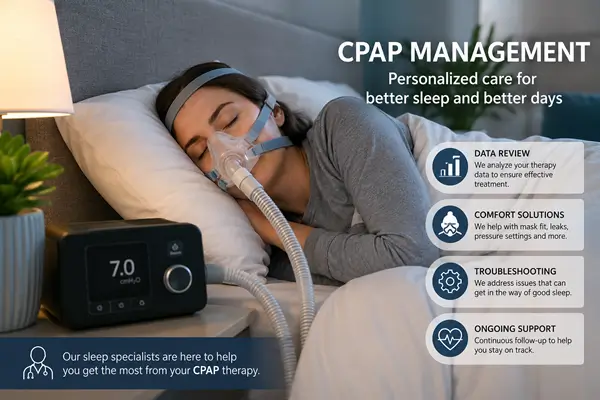
NOVA Pulmonary Critical Care and Sleep Associates provides personalized CPAP management in Vienna, Virginia. Our sleep medicine team helps patients understand their therapy, review available CPAP data, address common problems, and determine whether treatment is effectively controlling sleep apnea.
Whether you recently started CPAP or have used it for years, professional follow-up can help make therapy more comfortable, consistent, and effective.
NOVA Pulmonary Critical Care and Sleep Associates
📍 Vienna Office
124 Park Street SE, Suite 203
Vienna, VA 22180
Map it
📞 571-367-0000
Office Hours:
Mon – Fri: 9:00AM – 5:00PM
Sat & Sun: Closed
Schedule a CPAP Management Appointment
Personalized CPAP Support from Vienna Sleep Specialists
CPAP stands for continuous positive airway pressure. The machine delivers pressurized air through a mask while you sleep, helping prevent the airway from narrowing or closing.
Although CPAP is widely used to treat obstructive sleep apnea, each patient’s experience is different. The right mask, prescribed pressure, comfort settings, humidification, sleeping position, nasal breathing, and consistent use can all affect how well treatment works.
Our Vienna sleep specialists provide ongoing CPAP management that may include:
- Reviewing your sleep-apnea diagnosis and prescribed therapy
- Discussing how often and how long you use CPAP
- Reviewing available machine-generated therapy data
- Evaluating mask leaks and fit concerns
- Addressing dry mouth or nasal dryness
- Discussing pressure discomfort
- Reviewing residual breathing events
- Evaluating persistent snoring while using CPAP
- Addressing continued daytime sleepiness
- Reviewing humidifier and comfort-setting concerns
- Providing CPAP education
- Determining whether additional sleep testing may be appropriate
- Discussing alternative treatment options when clinically indicated
Do not independently change your prescribed pressure or stop using CPAP without first discussing the issue with your sleep medicine provider.
Who May Benefit from a CPAP Management Appointment?
A CPAP follow-up appointment may be helpful if you:
- Recently received a CPAP machine
- Are having difficulty becoming comfortable with treatment
- Remove the mask during the night without realizing it
- Wake with a dry mouth or sore throat
- Experience nasal congestion or irritation
- Notice frequent air leaks
- Feel that the pressure is too high or too low
- Have difficulty breathing out against the airflow
- Continue to snore while using CPAP
- Still feel tired despite using the machine
- Experience bloating or swallowed air
- Have marks, soreness, or skin irritation from the mask
- Need a review of your CPAP usage data
- Have changed weight significantly
- Have developed new medical or sleep-related symptoms
- Have not had a sleep medicine follow-up recently
- Need documentation related to ongoing treatment
You do not need to wait until you are ready to abandon therapy. Addressing problems early may make it easier to adjust to CPAP and use it consistently.
What Happens During a CPAP Follow-Up Visit?
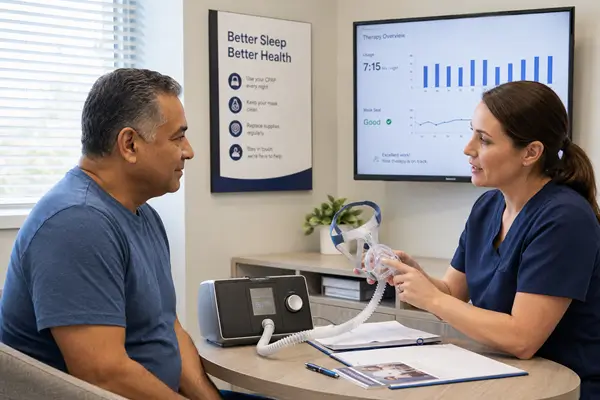
Your CPAP management appointment begins with a discussion of how treatment is going and whether your sleep-apnea symptoms have improved.
Your provider may ask about:
- Bedtime and wake-up time
- Frequency of CPAP use
- Average nightly usage
- Mask comfort
- Air leaks
- Dry mouth or nasal symptoms
- Nighttime awakenings
- Continued snoring or gasping
- Morning headaches
- Daytime energy and alertness
- Recent weight changes
- New medications or health conditions
- Cleaning and replacement of equipment
- Problems involving the machine, tubing, mask, or humidifier
When available, your provider may also review information recorded by the CPAP device.
Understanding Your CPAP Therapy Data
Many modern PAP machines record information about treatment. Depending on the device and data available, your sleep specialist may review:
CPAP Usage
Usage data can show how many nights the machine was used and approximately how long it was used each night.
Consistent use is important because CPAP only supports the airway while the device is being worn. Patients are generally encouraged to use prescribed therapy whenever they sleep, including during naps and while traveling.
Residual Apnea-Hypopnea Index
The machine may provide an estimated apnea-hypopnea index, or AHI, while you are using therapy. This estimates the number of breathing interruptions occurring per hour.
A machine-generated AHI is useful information, but it should not be interpreted alone. Mask leaks, event type, device limitations, symptoms, and your original sleep-study results must also be considered.
Mask Leak
Some air may escape around the CPAP mask. Excessive leakage can cause noise, eye irritation, dry mouth, pressure changes, and less effective delivery of prescribed therapy.
Your provider may discuss mask fit, mask condition, sleeping position, mouth breathing, headgear, or whether another mask style should be considered.
Pressure Information
Auto-adjusting PAP devices may record the pressures delivered during the night. Your sleep specialist can consider this information along with residual events, leakage, comfort, and symptoms.
Pressure settings should only be changed under the direction of an appropriately qualified healthcare provider.
Common CPAP Problems We Evaluate
CPAP Mask Leaks
A leaking mask is one of the most common CPAP concerns. Leaks may occur when:
- The mask is the wrong size or style
- Headgear is too loose or worn
- The mask cushion needs replacement
- The mask shifts when sleeping on your side
- Facial hair interferes with the seal
- The mask has been tightened excessively
- Air escapes through the mouth while using a nasal mask
Tightening the mask as much as possible is not always the solution. Excessive tightening can cause discomfort, skin irritation, and distortion of the mask cushion.
A sleep specialist can help evaluate whether the problem involves mask fit, mouth leakage, pressure, nasal congestion, or another factor.
Dry Mouth or Sore Throat
Dry mouth may develop because of:
- Mouth breathing
- Air leaking from the mouth
- An improperly fitting mask
- Inadequate humidification
- Nasal obstruction
- Medication side effects
- Dehydration
Possible solutions depend on the cause and may include reviewing humidification, addressing nasal symptoms, checking for leaks, or discussing a different mask style.
Nasal Congestion and Irritation
Some patients experience nasal stuffiness, dryness, burning, or a runny nose after starting CPAP.
Your provider may review:
- Heated humidification
- Heated tubing
- Mask fit
- Allergies
- Nasal obstruction
- Room humidity
- Cleaning practices
- Medication options when medically appropriate
Persistent congestion should be evaluated rather than assumed to be an unavoidable part of CPAP therapy.
Difficulty Tolerating CPAP Pressure
Some patients feel that the pressure is uncomfortable, especially while falling asleep or breathing out. Others feel that they are not receiving enough air.
Your sleep specialist may review the prescribed pressure, comfort features, ramp settings, expiratory pressure relief, mask type, machine data, and whether another PAP approach should be considered.
Do not adjust clinical pressure settings without medical guidance.
Removing the CPAP Mask During Sleep
It is common for new users to remove the mask during the night. This may be related to:
- Mask discomfort
- Air leakage
- Nasal congestion
- Pressure intolerance
- Claustrophobia
- Dryness
- Restless sleep
- Difficulty adapting to the equipment
Practicing with the mask while awake and addressing the underlying discomfort may make nighttime use easier.
Skin Irritation or Facial Marks
Skin irritation may result from excessive mask tension, moisture, pressure points, an aging cushion, or sensitivity to mask materials.
Your provider may recommend reviewing the fit, cleaning routine, cushion condition, or mask style. Significant skin breakdown should be evaluated promptly.
Swallowed Air and Bloating
Some patients experience aerophagia, which means swallowing air during CPAP use. It may cause belching, abdominal discomfort, or bloating.
Pressure, mask leakage, sleeping position, reflux, and other factors may contribute. Discuss persistent symptoms with your sleep specialist before making changes to treatment.
Continued Tiredness While Using CPAP
Continued daytime sleepiness does not always mean that CPAP has failed.
Your provider may evaluate:
- Inconsistent or insufficient CPAP use
- Persistent breathing events
- Mask leakage
- Insufficient sleep time
- Insomnia
- Restless legs syndrome
- Narcolepsy or hypersomnia
- Medication effects
- Depression or another medical condition
- An irregular work or sleep schedule
A review of your CPAP data and overall sleep history may help identify the next step.
CPAP Mask Options
CPAP masks come in several general styles. The best choice depends on facial structure, comfort, nasal breathing, sleeping position, pressure needs, and personal preference.
Nasal Pillow Mask
A nasal pillow mask rests near the nostrils and has minimal facial contact. It may be preferred by patients who feel confined by larger masks, but it may not be appropriate for everyone.
Nasal Mask
A nasal mask covers the nose. It may provide a balance between stability and limited facial coverage.
Full-Face Mask
A full-face mask generally covers the nose and mouth. It may be considered for patients who regularly breathe through their mouth or have difficulty maintaining a seal with a nasal interface.
A larger mask is not automatically better for mouth breathing, and a smaller mask is not automatically more comfortable. Proper fitting and professional guidance are important.
CPAP, APAP and BiPAP: What Is the Difference?
CPAP is one form of positive airway pressure therapy. Depending on the diagnosis and clinical circumstances, other devices may be used.
CPAP delivers a prescribed continuous pressure.
APAP, or auto-adjusting positive airway pressure, operates within a prescribed range and adjusts pressure in response to breathing patterns.
BiPAP or bilevel PAP provides different pressure levels during inhalation and exhalation. It may be used in selected patients based on their diagnosis, pressure needs, comfort, or other medical considerations.
Your sleep specialist will determine which type of PAP therapy is appropriate. Not every device is suitable for every form of sleep-disordered breathing.
CPAP Management for New Users
The first few weeks of therapy can be especially important. A new CPAP user may need time to become comfortable with the sensation of airflow and wearing a mask.
Helpful habits may include:
- Become familiar with the machine and mask before bedtime.
- Practice wearing the mask while awake.
- Use CPAP whenever you sleep.
- Keep a consistent bedtime routine.
- Report leaks, dryness, or discomfort early.
- Follow the manufacturer’s cleaning instructions.
- Attend scheduled sleep-medicine follow-up visits.
- Do not change prescribed pressure settings independently.
Early education and troubleshooting can help prevent small problems from becoming reasons to discontinue therapy.
Ongoing CPAP Management
Sleep apnea treatment should not end after the machine is prescribed. Follow-up may be needed when:
- Symptoms return
- Your weight changes substantially
- CPAP data show persistent events or excessive leakage
- You begin using a different mask
- You develop another medical condition
- You undergo surgery
- You continue to experience daytime sleepiness
- Your device or supplies need to be reassessed
- You have difficulty meeting insurance documentation requirements
- You are considering another sleep-apnea treatment
The frequency of follow-up depends on your individual condition, symptoms, treatment response, and insurance requirements.
CPAP Compliance and Insurance Requirements
Insurance plans may use the term “CPAP compliance” when determining continued coverage for equipment. Requirements vary by insurer and policy.
Machine use that satisfies an insurance requirement does not necessarily mean that all sleep-apnea symptoms are adequately controlled. Your provider may also consider:
- Residual breathing events
- Mask leakage
- Sleep quality
- Daytime symptoms
- Treatment comfort
- Overall clinical response
Contact your insurance company or medical-equipment provider for policy-specific coverage and equipment information.
When Additional Sleep Testing May Be Needed
Some patients may need additional testing after starting CPAP. Your sleep specialist may consider a follow-up or titration study when:
- Therapy data remain abnormal
- Symptoms continue despite regular use
- Pressure needs are uncertain
- Central breathing events are suspected
- Significant oxygen reduction continues
- There has been a substantial health or weight change
- Another sleep disorder may be present
- A different PAP device is being considered
The appropriate evaluation depends on your diagnosis, prior test results, symptoms, and response to therapy.
What If You Cannot Tolerate CPAP?
Do not assume that one uncomfortable mask or difficult first week means CPAP cannot work for you. Many problems can be addressed through mask changes, humidification, comfort settings, education, or clinical reassessment.
When CPAP remains difficult despite appropriate troubleshooting, your sleep specialist may discuss whether another treatment is medically suitable. Depending on the type and severity of sleep apnea, options may include:
- Auto-adjusting PAP
- Bilevel PAP
- Oral appliance therapy
- Positional treatment
- Weight-management recommendations
- Evaluation of nasal obstruction
- Inspire therapy for selected eligible patients
- Other individualized treatment approaches
Alternative treatment depends on your diagnosis and should be discussed with a qualified sleep medicine provider.
Why Choose NOVA Pulmonary for CPAP Management?
Patients choose NOVA Pulmonary Critical Care and Sleep Associates for:
- Board-certified sleep medicine expertise
- Personalized CPAP management
- CPAP education and troubleshooting
- Review of available therapy data
- Sleep-apnea testing and treatment
- Home sleep apnea testing
- In-lab sleep studies when indicated
- CPAP titration studies
- Evaluation of persistent sleep symptoms
- Convenient care in Vienna
- Coordinated sleep and pulmonary medicine services
Our goal is to help patients understand their treatment and address the factors that may interfere with comfortable, consistent CPAP use.
CPAP Management Near Tysons, McLean, Oakton and Fairfax
Our Vienna office provides CPAP follow-up and sleep-apnea care for patients from:
- Vienna
- Tysons
- McLean
- Oakton
- Dunn Loring
- Merrifield
- Falls Church
- Fairfax
- Reston
- Annandale
- Burke
- Centreville
- Other Northern Virginia communities
The office is located on Park Street SE near downtown Vienna and is accessible from Route 123, Nutley Street, I-66, and surrounding Fairfax County communities.
Schedule a CPAP Management Appointment in Vienna, VA
CPAP therapy should help control sleep apnea without creating problems that make treatment impossible to use. If you are experiencing mask leaks, pressure discomfort, dryness, continued fatigue, or other concerns, schedule an appointment with NOVA Pulmonary Critical Care and Sleep Associates.
Our Vienna sleep medicine team can review your concerns, assess available therapy data, and help determine the appropriate next steps.
Frequently Asked Questions About CPAP Management
Do you provide CPAP management in Vienna, VA?
Yes. NOVA Pulmonary Critical Care and Sleep Associates provides personalized CPAP management and sleep-apnea follow-up at its Vienna office. Appointments may include reviewing therapy use, symptoms, mask leakage, comfort concerns, and available CPAP data.
What should I bring to a CPAP follow-up appointment?
Bring your CPAP machine if instructed, along with the mask, tubing, power cord, and any available data card. Also bring a current medication list, insurance information, and details about your medical-equipment provider. Contact the office before your appointment to confirm which equipment is needed.
Can a sleep specialist help with a leaking CPAP mask?
Yes. Mask leaks may be related to mask size, style, cushion wear, headgear, sleeping position, mouth breathing, facial hair, or pressure. A sleep specialist can assess the possible cause and recommend appropriate next steps.
Why do I wake up with a dry mouth after using CPAP?
Dry mouth may be caused by mouth breathing, mask leakage, nasal congestion, inadequate humidification, medication effects, or other factors. Your provider can help evaluate the cause rather than recommending the same solution for every patient.
Can my CPAP pressure be adjusted?
CPAP pressure may be reassessed when clinically appropriate. Your sleep specialist may review your diagnosis, symptoms, mask leakage, treatment data, and prior sleep-study results before determining whether a change is needed. Do not change prescribed pressure settings without medical guidance.
Why am I still tired while using CPAP?
Continued fatigue may result from insufficient CPAP use, persistent breathing events, leaks, inadequate sleep, insomnia, another sleep disorder, medication effects, or a separate medical condition. A follow-up evaluation can help identify possible contributing factors.
How often should I see my sleep doctor after starting CPAP?
Follow-up frequency varies. New users may need earlier follow-up to address problems and review treatment response. Additional appointments may be recommended based on symptoms, therapy data, insurance requirements, or changes in your health.
Should I use CPAP during naps?
Patients are generally advised to use prescribed CPAP whenever they sleep, including during naps, unless their healthcare provider gives different instructions.
Can I travel with my CPAP machine?
Yes. Many patients travel with CPAP. Plan for access to power, pack the device securely, and bring the needed mask, tubing, filters, and supplies. Ask the airline about current travel requirements when flying.
What if I cannot tolerate my CPAP mask?
Contact your sleep provider rather than discontinuing therapy without guidance. The issue may involve mask style, size, leakage, pressure, nasal symptoms, claustrophobia, or another concern that can be addressed.
Is CPAP management different from sleep-apnea testing?
Yes. Sleep-apnea testing is used to diagnose or assess sleep-disordered breathing. CPAP management takes place after PAP therapy is prescribed and focuses on treatment use, comfort, available data, effectiveness, and ongoing follow-up.
How do I schedule a CPAP appointment in Vienna?
Call NOVA Pulmonary Critical Care and Sleep Associates at 571-367-0000 or use the online appointment request form to schedule a CPAP management consultation at the Vienna office.
Office Locations
Conveniently located near you in Dulles, Leesburg, (Loudoun County) and Vienna, (Fairfax County), VA
NOVA Pulmonary – Dulles
24430 Stone Springs Boulevard
Suite 550
Dulles, VA 20166
NOVA Pulmonary – Lansdowne
19415 Deerfield Avenue
Suite 301
Lansdowne, VA 20176
Meet the team at NOVA Pulmonary Critical Care and Sleep Associates

Dr. Aditya N Dubey, M.D, F.C.C.P. – Founder
Specialty:
Pulmonary, Critical Care and Sleep Medicine
Board Certified by American Board of Internal Medicine in the Subspecialities of Pulmonary Medicine, Critical Care Medicine and Sleep Medicine. Learn more about Dr. Dubey

Dr. Petra Thomas, M.D.
Specialty:
Pulmonary Medicine
Board Certified by American Board of Internal Medicine in the Subspecialities of Pulmonary Medicine. Learn more about Dr. Thomas

Dr. Esha Kapania, M.D.
Specialty:
Pulmonary Medicine
Board Certified by American Board of Internal Medicine in the Subspecialities of Pulmonary Medicine. Learn more about Dr. Kapania

Dr. Arman Murabia, M.D.
Specialty:
Pulmonary, Critical Care and Sleep Medicine
Board Certified by American Board of Internal Medicine in the Subspecialities of Pulmonary Medicine, Critical Care Medicine and Sleep Medicine. Learn more about Dr. Murabia

Dr. Zara Martirosyan, MD
Specialty:
Sleep Medicine & Internal Medicine Specialist
Board-certified physician in both Sleep medicine and Internal medicine. Learn more about Dr. Martirosyan

Rebekah Lee, AGNP-C, Lead APP
Nurse Practitioner. Learn more about Rebekah Lee

Paulos Abebe PA-C
Physician Assistant Learn more about Paulos Abebe PA-C

Katie Cameron, PA
Physician Assistant Learn more about Katie Cameron, PA-C
Patients who are still being evaluated for sleep apnea can learn more about sleep-apnea testing in Vienna and convenient home sleep apnea testing. For patients who have already received a diagnosis, our sleep-apnea treatment in Vienna may include CPAP therapy, follow-up care, and, when appropriate, a CPAP titration study to help determine suitable therapy settings. Patients who have difficulty tolerating CPAP may also be evaluated for alternatives such as oral appliance therapy or Inspire therapy. Our experienced Vienna sleep specialists can review your symptoms, test results, and treatment response to help determine the most appropriate next step.