Emphysema Treatment Vienna, VA
Comprehensive Pulmonary Care for Emphysema and COPD
Emphysema is a chronic lung condition that damages the air sacs (alveoli) within the lungs, making it increasingly difficult to move air in and out effectively. It is one of the conditions that falls under chronic obstructive pulmonary disease (COPD) and can cause shortness of breath, persistent coughing, wheezing, fatigue, and reduced ability to perform everyday activities.
At NOVA Pulmonary Critical Care and Sleep Associates, our pulmonary specialists provide comprehensive emphysema evaluation and treatment in Vienna, VA. We work with patients to assess the severity of their lung disease, identify factors contributing to their symptoms, and develop individualized treatment plans designed to support breathing, lung function, activity, and overall quality of life.
NOVA Pulmonary Critical Care and Sleep Associates
📍 Vienna Office
124 Park Street SE, Suite 203
Vienna, VA 22180
Map it
📞 571-367-0000
Office Hours:
Mon – Fri: 9:00AM – 5:00PM
Sat & Sun: Closed
What Is Emphysema?
Inside your lungs are millions of tiny air sacs called alveoli. These structures allow oxygen from the air you breathe to enter your bloodstream while carbon dioxide leaves the body.
With emphysema, the walls between some of these air sacs become damaged. Over time, the lungs lose some of their natural elasticity, and air can become trapped inside the lungs. This can make exhaling more difficult and reduce the amount of oxygen effectively transferred into the bloodstream.
Emphysema generally develops gradually, which means lung damage may be present before symptoms become significant.
What Causes Emphysema?
Long-term exposure to substances that irritate and damage the lungs is a major risk factor for emphysema.
Possible risk factors include:
- Cigarette smoking
- Secondhand smoke exposure
- Long-term exposure to air pollution
- Workplace exposure to certain dusts, fumes, or chemicals
- Age and cumulative environmental exposure
- Alpha-1 antitrypsin deficiency, an inherited condition that can increase the risk of developing emphysema
Smoking is an important risk factor, but not every patient diagnosed with emphysema has a history of smoking. A thorough pulmonary evaluation can help identify relevant risk factors and determine the extent of lung disease.
Symptoms of Emphysema
Shortness of breath is one of the most common symptoms of emphysema. Initially, breathing difficulties may be most noticeable during physical activity. As the disease progresses, some patients may experience symptoms with less strenuous activity or even while resting.
Symptoms can include:
✓ Shortness of breath
✓ Persistent or chronic cough
✓ Wheezing
✓ Chest tightness
✓ Difficulty taking a full breath
✓ Reduced exercise tolerance
✓ Fatigue
✓ Frequent respiratory infections
✓ Unintentional weight loss in advanced disease
Because these symptoms can also occur with other pulmonary and cardiovascular conditions, an accurate diagnosis is important.
Emphysema Evaluation in Vienna, VA
If you are experiencing persistent shortness of breath or have been told that a chest X-ray or CT scan shows emphysema, a pulmonologist can perform a more comprehensive evaluation of your respiratory health.
At NOVA Pulmonary, your evaluation may include your medical history, symptoms, smoking and environmental exposure history, physical examination, and review of previous imaging and testing.
Depending on your individual circumstances, additional testing may be recommended.
Pulmonary Function Testing
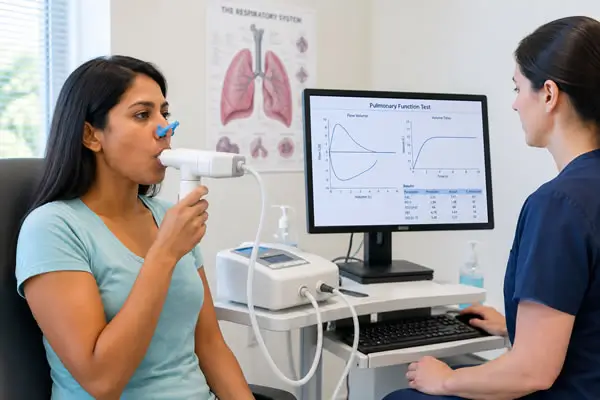
Pulmonary function tests (PFTs) measure how well your lungs are working. Testing can help determine how much air you can move in and out of your lungs and how efficiently your lungs transfer gases.
Spirometry is commonly used to identify airflow obstruction and can help physicians assess the severity of COPD.
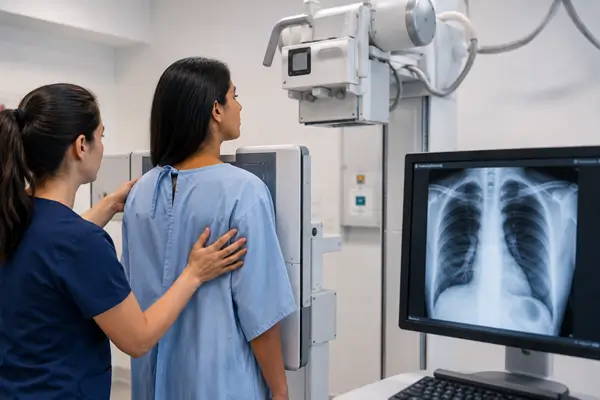
Chest X-Ray
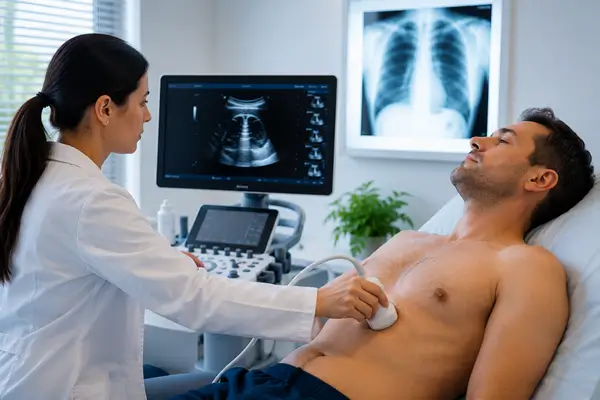
A chest X-ray may show changes associated with emphysema and can also help physicians evaluate other potential causes of respiratory symptoms.
CT Scan of the Chest
A chest CT provides more detailed images of the lungs and may reveal areas of emphysema that are not as apparent on a standard chest X-ray.
CT imaging can also help identify other lung abnormalities that may require further evaluation.
Oxygen Level Assessment
Pulse oximetry can be used to measure the oxygen saturation in your blood. In certain situations, additional testing may be performed to evaluate oxygen levels during activity or sleep.
Emphysema Treatment in Vienna, VA
There is currently no treatment that can reverse the structural lung damage caused by emphysema. However, appropriate treatment can help manage symptoms, improve breathing and exercise tolerance, reduce exacerbations, and potentially slow further lung damage, depending on the individual.
Treatment is tailored to each patient’s symptoms, lung function, medical history, and disease severity.
Your treatment plan may include:
Smoking Cessation
For patients who smoke, stopping smoking is one of the most important steps that can be taken to reduce continued lung damage.
Inhaled Medications
Bronchodilators may be prescribed to help relax the muscles surrounding the airways and make breathing easier. Some patients may also benefit from inhaled corticosteroids or combination inhalers depending on their COPD symptoms and exacerbation history.
Pulmonary Rehabilitation
Pulmonary rehabilitation combines supervised exercise, education, breathing techniques, and strategies for managing chronic lung disease.
For appropriate patients, pulmonary rehabilitation can help improve exercise capacity and make everyday activities easier to perform.
Oxygen Therapy
Some patients with advanced emphysema develop chronically low blood oxygen levels. When clinically indicated, supplemental oxygen may be prescribed based on appropriate testing.
Vaccinations and Infection Prevention
Respiratory infections can be particularly difficult for people with chronic lung disease. Your healthcare team may recommend appropriate vaccinations and other measures to reduce the risk of serious respiratory infections.
Advanced Treatment Options
Patients with severe emphysema that remains difficult to manage despite standard treatment may require evaluation for additional treatment options.
Depending on the individual, these can include specialized procedures or surgical evaluation. Your pulmonologist can determine whether referral for advanced emphysema treatment is appropriate.
Living With Emphysema
Emphysema is a chronic condition, but ongoing pulmonary care can play an important role in managing the disease.
Your pulmonologist can monitor changes in symptoms and lung function over time and adjust treatment when necessary.
Patients can also support their respiratory health by avoiding tobacco smoke and other lung irritants, remaining physically active as medically appropriate, taking medications as prescribed, and seeking medical attention when respiratory symptoms suddenly worsen.
What Is an Emphysema Exacerbation?
Patients with emphysema and COPD may experience periods when their respiratory symptoms suddenly become worse. These are often referred to as COPD exacerbations or flare-ups.
During an exacerbation, you may experience increased shortness of breath, more coughing, changes in mucus production, wheezing, or greater difficulty performing normal activities.
Respiratory infections are a common trigger, although exacerbations can occur for other reasons.
Recognizing changes in your usual breathing symptoms and contacting your healthcare provider promptly can be an important part of managing COPD.
When Should You See a Pulmonologist?
Consider scheduling a pulmonary evaluation if you:
✓ Have persistent or unexplained shortness of breath
✓ Have a chronic cough or wheezing
✓ Have been diagnosed with emphysema or COPD
✓ Have a chest CT showing emphysema
✓ Experience frequent respiratory infections
✓ Have difficulty performing activities because of breathlessness
✓ Need ongoing management of COPD medications or inhalers
✓ Have experienced repeated COPD exacerbations
✓ Have concerns about declining lung function
Severe or rapidly worsening shortness of breath, chest pain, confusion, fainting, or blue or gray lips or skin may require immediate emergency medical attention.
Emphysema Specialist in Vienna, VA
At NOVA Pulmonary Critical Care and Sleep Associates, our pulmonary physicians provide evaluation and ongoing management for patients with emphysema, COPD and other chronic respiratory conditions.
Our goal is to understand how your lung condition is affecting your breathing and everyday activities and develop an individualized treatment plan based on your symptoms, testing, and overall health.
If you have been diagnosed with emphysema, have an abnormal chest CT, or are experiencing persistent shortness of breath, schedule an appointment with our pulmonary team in Vienna for further evaluation.
Serving Vienna and Northern Virginia
Our Vienna pulmonary office provides convenient access to respiratory care for patients from Vienna, Tysons, McLean, Oakton, Fairfax, Falls Church, Merrifield and surrounding Northern Virginia communities.
Helping You Breathe Better With Personalized Pulmonary Care
Directions & Parking Information
Our Vienna office is located on Park Street SE near the Vienna Community Center and historic downtown Vienna.
Free parking available near the building
Elevator access to Suite 203
Easily accessible from Route 123 and I-66
Minutes from Tysons Corner
If you need assistance locating our office, please call and our staff will guide you.
Frequently Asked Questions About Emphysema
Is emphysema the same as COPD?
Emphysema is a type of chronic obstructive pulmonary disease (COPD). COPD is a broader term that includes emphysema and chronic bronchitis. Some patients have features of both conditions.
Can emphysema be cured?
The lung damage caused by emphysema cannot currently be reversed. However, treatment and lifestyle changes can help manage symptoms, reduce exacerbations and support lung function and quality of life.
What are the early symptoms of emphysema?
Shortness of breath during physical activity may be an early symptom. Other symptoms can include chronic coughing, wheezing, fatigue and reduced exercise tolerance. Because symptoms often develop gradually, some people may not recognize them immediately.
How is emphysema diagnosed?
Diagnosis may involve a medical history, physical examination, pulmonary function testing, chest imaging and assessment of oxygen levels. A CT scan can provide detailed images showing areas of emphysema within the lungs.
Does everyone with emphysema need oxygen?
No. Supplemental oxygen is generally prescribed when testing shows that a patient’s blood oxygen level meets specific criteria. Many people with emphysema do not require oxygen therapy.
Can emphysema get worse over time?
Emphysema can progress over time, particularly with continued exposure to tobacco smoke or other lung irritants. Appropriate medical management and avoiding further harmful exposures can help reduce risk and manage symptoms.
What type of doctor treats emphysema?
A pulmonologist specializes in conditions affecting the lungs and respiratory system. Pulmonologists evaluate and manage emphysema, COPD, chronic bronchitis and many other respiratory disorders.
Where can I see an emphysema specialist in Vienna, VA?
NOVA Pulmonary Critical Care and Sleep Associates provides evaluation and treatment for emphysema and COPD at its Vienna location. Our pulmonary specialists can assess your symptoms and lung function and develop an individualized treatment plan.
Office Locations
Conveniently located near you in Dulles, Leesburg, (Loudoun County) and Vienna, (Fairfax County), VA
NOVA Pulmonary – Dulles
24430 Stone Springs Boulevard
Suite 550
Dulles, VA 20166
NOVA Pulmonary – Lansdowne
19415 Deerfield Avenue
Suite 301
Lansdowne, VA 20176
NOVA Pulmonary Critical Care and Sleep Associates is committed to providing excellent care in all aspects of Pulmonary Medicine and Sleep Disorders. With offices located in Lansdowne and Dulles, South Riding, we offer care for the entire Northern Virginia region, serving locations from Chantilly, Fairfax, Vienna, Centreville, Manassas, Gainesville to Reston, Sterling, Leesburg, Ashburn, Brambleton, Purcellville and more.
Meet the team at NOVA Pulmonary Critical Care and Sleep Associates

Dr. Aditya N Dubey, M.D, F.C.C.P. – Founder
Specialty:
Pulmonary, Critical Care and Sleep Medicine
Board Certified by American Board of Internal Medicine in the Subspecialities of Pulmonary Medicine, Critical Care Medicine and Sleep Medicine. Learn more about Dr. Dubey

Dr. Petra Thomas, M.D.
Specialty:
Pulmonary Medicine
Board Certified by American Board of Internal Medicine in the Subspecialities of Pulmonary Medicine. Learn more about Dr. Thomas

Dr. Esha Kapania, M.D.
Specialty:
Pulmonary Medicine
Board Certified by American Board of Internal Medicine in the Subspecialities of Pulmonary Medicine. Learn more about Dr. Kapania

Dr. Arman Murabia, M.D.
Specialty:
Pulmonary, Critical Care and Sleep Medicine
Board Certified by American Board of Internal Medicine in the Subspecialities of Pulmonary Medicine, Critical Care Medicine and Sleep Medicine. Learn more about Dr. Murabia

Dr. Zara Martirosyan, MD
Specialty:
Sleep Medicine & Internal Medicine Specialist
Board-certified physician in both Sleep medicine and Internal medicine. Learn more about Dr. Martirosyan

Rebekah Lee, AGNP-C, Lead APP
Nurse Practitioner. Learn more about Rebekah Lee

Paulos Abebe PA-C
Physician Assistant Learn more about Paulos Abebe PA-C

Katie Cameron, PA
Physician Assistant Learn more about Katie Cameron, PA-C