What is Spirometry?
Spirometry is a common pulmonary function test that measures the amount and speed of air that a person can inhale (breathe in) and exhale (breathe out). This test provides important information about lung function and is often used to assess respiratory conditions such as asthma, chronic obstructive pulmonary disease (COPD), and other lung diseases.
How does Spirometry work?
Here’s how a spirometry test typically works:
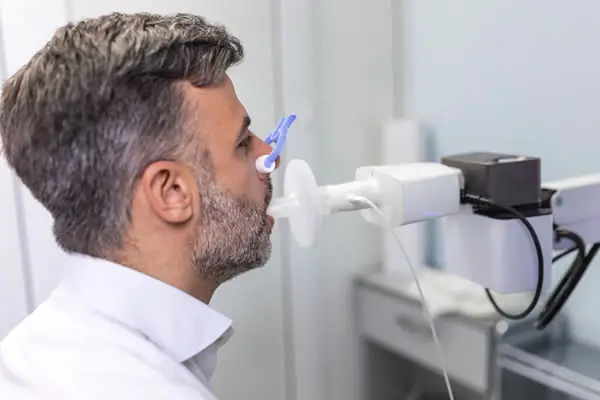
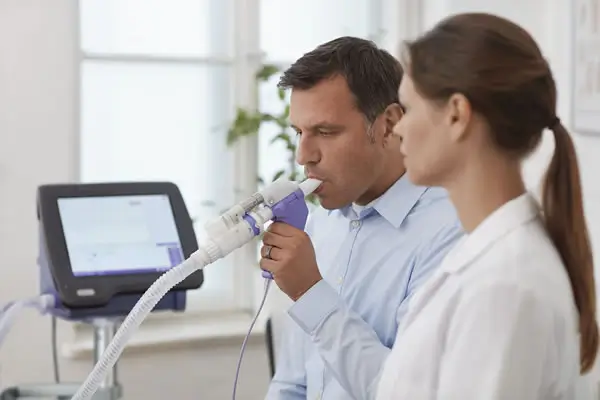
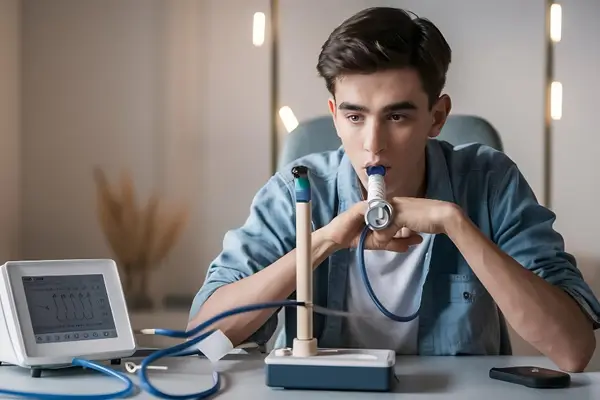
Preparation: The individual is asked to sit comfortably and wear a nose clip to ensure that air is only breathed in and out through the mouth, sealing off the nose.
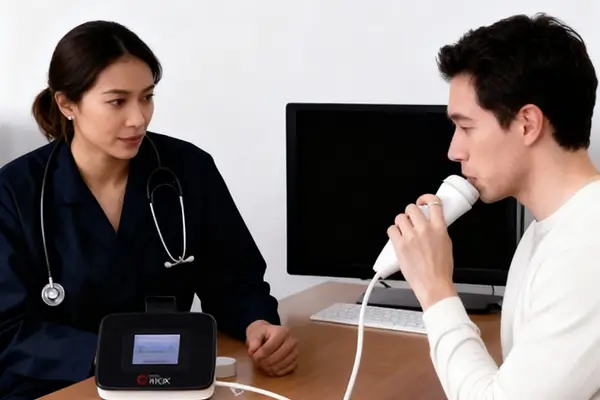
Instructions: The healthcare provider or technician will provide clear instructions on how to perform the test. This usually involves taking a deep breath in and then blowing out as forcefully and completely as possible into a handheld device called a spirometer.
Testing Maneuvers:
Forced Vital Capacity (FVC): The person takes a deep breath and then exhales as forcefully and completely as possible into the spirometer.
Forced Expiratory Volume in 1 second (FEV1): This measures the amount of air expelled in the first second of the forced breath.
FEV1/FVC Ratio: This ratio helps assess the obstruction of airflow.
Repeat Testing: The process is usually repeated multiple times to ensure accuracy and consistency of results.
The results of spirometry can provide valuable information, including:
Forced Vital Capacity (FVC): The total amount of air a person can exhale forcefully after a deep inhalation.
Forced Expiratory Volume in 1 second (FEV1): The amount of air expelled in the first second of the forced breath.
FEV1/FVC Ratio: This ratio helps in distinguishing between obstructive and restrictive lung diseases.
Who May Benefit from Spirometry Testing?
You may benefit from spirometry testing if you experience:
- Shortness of breath
- Wheezing
- Chronic cough
- Chest tightness
- Frequent respiratory infections
- Difficulty exercising due to breathing problems
- A history of smoking
- Asthma or COPD symptoms
Spirometry can help identify the cause of breathing difficulties and guide appropriate treatment.
Common use of Spirometry
Diagnosis and Monitoring of lung diseases: Spirometry is often used to diagnose and monitor conditions such as asthma, COPD, and other lung diseases.
Assessment of Lung Function: It helps assess how well the lungs are working and whether there is any obstruction or restriction of airflow.
Evaluation of Respiratory Symptoms: For individuals with symptoms like shortness of breath, cough, or wheezing, spirometry can provide objective data to aid in diagnosis.
Preoperative Assessment: It may be used before certain surgeries to evaluate a person’s respiratory fitness.
Spirometry is a non-invasive and widely used test in respiratory medicine. It is generally safe, although it may not be suitable for individuals with certain health conditions. The results are often interpreted by healthcare professionals to guide diagnosis and treatment decisions.
Spirometry FAQs | NOVA Pulmonary
What is spirometry?
Spirometry is a common pulmonary function test that measures how well your lungs work by assessing how much air you can inhale and exhale, and how quickly you can breathe out.
Why is spirometry performed?
Spirometry is used to diagnose and monitor lung conditions such as Asthma and Chronic Obstructive Pulmonary Disease (COPD). It also helps evaluate symptoms like shortness of breath, chronic cough, and wheezing.
How does a spirometry test work?
During the test, you will breathe into a mouthpiece connected to a machine called a spirometer. You’ll be asked to take a deep breath and exhale as forcefully and completely as possible.
Is spirometry painful?
No, spirometry is a non-invasive and painless test. Some patients may feel slightly lightheaded from deep breathing, but this usually resolves quickly.
How long does a spirometry test take?
The test typically takes about 15 to 30 minutes, including preparation and multiple breathing attempts to ensure accurate results.
Do I need to prepare for a spirometry test?
Yes, your provider may recommend:
- Avoiding heavy meals before the test
- Not smoking for several hours beforehand
- Avoiding certain medications (if instructed)
- Wearing comfortable clothing
What do spirometry results show?
Spirometry measures key values such as:
- Forced Vital Capacity (FVC)
- Forced Expiratory Volume in 1 second (FEV1)
These results help determine if there is airflow obstruction or restriction in your lungs.
What conditions can spirometry detect?
Spirometry can help diagnose:
- Asthma
- Chronic Obstructive Pulmonary Disease
- Pulmonary Fibrosis
- Bronchiectasis
Can spirometry detect lung cancer?
Spirometry does not diagnose Lung Cancer, but it can detect abnormal lung function that may prompt further testing such as imaging studies.
What is a normal spirometry result?
Normal results depend on age, height, gender, and ethnicity. Your pulmonologist will compare your results to predicted values to determine if your lung function is within a healthy range.
What happens if my spirometry results are abnormal?
If results are abnormal, your provider may recommend additional tests, medications, or treatments depending on the underlying condition.
Can children have spirometry tests?
Yes, spirometry can be performed on children, typically those aged 5 years and older, who are able to follow breathing instructions.
How often should spirometry be done?
The frequency depends on your condition. Patients with chronic lung diseases like Chronic Obstructive Pulmonary Disease may need regular testing to monitor disease progression.
Is spirometry safe?
Yes, spirometry is a safe and routine test. It is widely used in pulmonary care with minimal risk.
Meet the team at NOVA Pulmonary Critical Care and Sleep Associates

Dr. Aditya N Dubey, M.D, F.C.C.P. – Founder
Specialty:
Pulmonary, Critical Care and Sleep Medicine
Board Certified by American Board of Internal Medicine in the Subspecialities of Pulmonary Medicine, Critical Care Medicine and Sleep Medicine. Learn more about Dr. Dubey

Dr. Petra Thomas, M.D.
Specialty:
Pulmonary Medicine
Board Certified by American Board of Internal Medicine in the Subspecialities of Pulmonary Medicine. Learn more about Dr. Thomas

Dr. Esha Kapania, M.D.
Specialty:
Pulmonary Medicine
Board Certified by American Board of Internal Medicine in the Subspecialities of Pulmonary Medicine. Learn more about Dr. Kapania

Dr. Arman Murabia, M.D.
Specialty:
Pulmonary, Critical Care and Sleep Medicine
Board Certified by American Board of Internal Medicine in the Subspecialities of Pulmonary Medicine, Critical Care Medicine and Sleep Medicine. Learn more about Dr. Murabia

Dr. Zara Martirosyan, MD
Specialty:
Sleep Medicine & Internal Medicine Specialist
Board-certified physician in both Sleep medicine and Internal medicine. Learn more about Dr. Martirosyan

Rebekah Lee, AGNP-C, Lead APP
Nurse Practitioner. Learn more about Rebekah Lee

Paulos Abebe PA-C
Physician Assistant Learn more about Paulos Abebe PA-C

Katie Cameron, PA
Physician Assistant Learn more about Katie Cameron, PA-C
Office Locations
Conveniently located near you in Dulles, Leesburg, (Loudoun County) and Vienna, (Fairfax County), VA
NOVA Pulmonary – Dulles
24430 Stone Springs Boulevard
Suite 550
Dulles, VA 20166
NOVA Pulmonary – Lansdowne
19415 Deerfield Avenue
Suite 301
Lansdowne, VA 20176
Pulmonary Testing
Cardiopulmonary Exercise Test (CPET)