
Pleural Effusion Evaluation & Treatment, Vienna, VA
Expert Pulmonary Care for Fluid Around the Lungs
A pleural effusion occurs when excess fluid collects in the pleural space, the thin area between the lungs and the chest wall. Depending on the amount of fluid and the underlying cause, a pleural effusion may cause shortness of breath, chest discomfort, coughing, or difficulty taking a deep breath. Some smaller pleural effusions may cause few or no noticeable symptoms.
At NOVA Pulmonary Critical Care and Sleep Associates, our pulmonary specialists provide comprehensive pleural effusion evaluation and treatment in Vienna, VA. Because pleural effusion can develop for many different reasons, determining why the fluid has accumulated is an important part of developing an appropriate treatment plan.
Our physicians evaluate your symptoms, medical history, imaging results, and other clinical findings to determine the next steps in your care.
NOVA Pulmonary Critical Care and Sleep Associates
📍 Vienna Office
124 Park Street SE, Suite 203
Vienna, VA 22180
Map it
📞 571-367-0000
Office Hours:
Mon – Fri: 9:00AM – 5:00PM
Sat & Sun: Closed
What Is a Pleural Effusion?
The lungs are surrounded by thin layers of tissue called the pleura. Normally, a very small amount of fluid between these layers allows the lungs to move smoothly as you breathe.
A pleural effusion develops when an abnormal amount of fluid accumulates in this space. The fluid may place pressure on the lung and, when the effusion is large enough, interfere with normal breathing.
Pleural effusion is not a disease itself. Rather, it can be a sign or complication of another medical condition. Finding the underlying cause is therefore an essential part of the evaluation.
What Causes Pleural Effusion?
Many different medical conditions can cause fluid to accumulate around the lungs. Some of the more common causes include:
- Pneumonia and other infections
- Congestive heart failure
- Cancer
- Pulmonary embolism (blood clot in the lung)
- Kidney or liver disease
- Inflammatory or autoimmune conditions
- Chest injury or trauma
- Certain medications or medical procedures
The type of fluid and the circumstances surrounding its development can provide important clues about the underlying cause.
Symptoms of Pleural Effusion
Symptoms can vary depending on how much fluid is present, how quickly it accumulated, and the condition responsible for the effusion.
Patients may experience:
- Shortness of breath
- Difficulty taking a deep breath
- Chest pain or pressure
- Sharp chest pain that worsens with deep breathing or coughing
- Persistent cough
- Fatigue
- Fever when an infection is present
Some people with a small pleural effusion may have no symptoms, and the fluid may first be discovered during a chest X-ray or other imaging study performed for another reason.

Pleural Effusion Evaluation in Vienna, VA
If imaging has shown fluid around your lung, the next step is determining why the pleural effusion developed and whether treatment or drainage is necessary.
Your pulmonary evaluation may include a detailed medical history and physical examination along with review of previous imaging and laboratory results.
Depending on your individual situation, additional testing may include:
Chest X-Ray
A chest X-ray is commonly used to identify fluid around the lungs and may help determine the approximate size and location of the effusion.
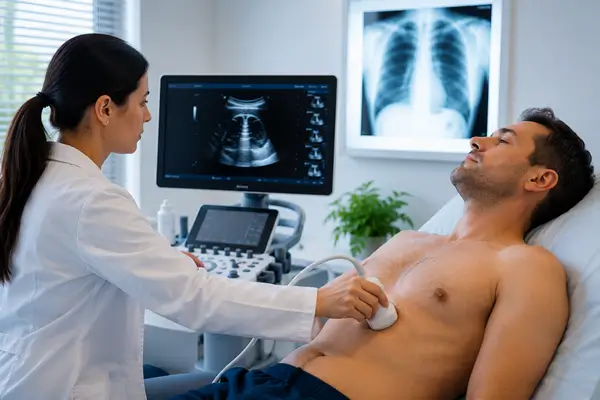
Chest Ultrasound
Ultrasound can detect relatively small amounts of pleural fluid and provide additional information about its location and characteristics. Ultrasound may also be used to help guide procedures involving the pleural space.
CT Scan of the Chest
A CT scan provides more detailed images of the lungs, pleura, and surrounding structures. It may help identify pneumonia, lung abnormalities, masses, or other conditions that could be contributing to fluid accumulation.
Thoracentesis and Pleural Fluid Analysis
In some patients, a procedure called thoracentesis may be recommended. During thoracentesis, a thin needle or catheter is used to remove fluid from the pleural space.
The fluid can then be analyzed in a laboratory to help determine why the effusion developed. Thoracentesis may also help relieve shortness of breath when a larger effusion is placing pressure on the lung.
Treatment for Pleural Effusion
Treatment depends primarily on the cause of the pleural effusion, its size, whether it is causing symptoms, and whether the fluid continues to return.
A small effusion that is not causing significant symptoms may sometimes be monitored while the underlying medical condition is treated.
For other patients, treatment may involve addressing the underlying infection, heart condition, inflammatory disease, or other cause of the fluid buildup.
Larger or symptomatic pleural effusions may require drainage. Recurrent or complicated effusions can sometimes require additional procedures or referral for specialized pleural management.
Why Is Determining the Cause Important?
Simply identifying fluid around the lung does not explain why it developed.
Pleural effusion may occur with relatively common conditions such as pneumonia or heart failure, but it can also be associated with pulmonary embolism, malignancy, and other conditions requiring further evaluation.
For this reason, your pulmonologist considers the entire clinical picture rather than treating the imaging finding alone.
The goal is to determine the underlying cause whenever possible and recommend treatment based on the diagnosis and your individual medical needs.
When Should You See a Pulmonologist for Pleural Effusion?
A pulmonary evaluation may be appropriate if:
✓ A chest X-ray or CT scan shows fluid around the lung
✓ You have unexplained or worsening shortness of breath
✓ You experience persistent chest discomfort or pain when breathing
✓ A pleural effusion continues to return
✓ You recently had pneumonia and fluid remains around the lung
✓ The cause of the pleural effusion is unclear
✓ Your primary care physician or another specialist recommends pulmonary evaluation
Sudden or severe shortness of breath, significant chest pain, fainting, blue or gray lips or skin, or other severe symptoms should be evaluated as an emergency rather than waiting for an outpatient appointment.
Pleural Effusion Specialist in Vienna, VA
At NOVA Pulmonary Critical Care and Sleep Associates, our pulmonary physicians evaluate a wide range of lung and respiratory conditions, including pleural effusion.
Our goal is to determine the possible cause of fluid accumulation, assess how it is affecting your breathing and lung function, and develop an individualized plan for further evaluation and treatment.
If you have been diagnosed with a pleural effusion in Vienna, VA, or an imaging study has identified fluid around your lung, schedule an appointment with our pulmonary team for further evaluation.
Serving Vienna and Northern Virginia
Our Vienna pulmonary office provides convenient access to pulmonary care for patients throughout Vienna, Tysons, McLean, Fairfax, Falls Church, Oakton, Merrifield and surrounding Northern Virginia communities.
Directions & Parking Information
Our Vienna office is located on Park Street SE near the Vienna Community Center and historic downtown Vienna.
Free parking available near the building
Elevator access to Suite 203
Easily accessible from Route 123 and I-66
Minutes from Tysons Corner
If you need assistance locating our office, please call and our staff will guide you.
Frequently Asked Questions About Pleural Effusion
Is pleural effusion serious?
It depends on the cause, amount of fluid, and the patient’s overall health. Some small effusions resolve as the underlying condition improves, while others require additional testing or treatment. Because pleural effusion can have many causes, appropriate medical evaluation is important.
Can pleural effusion cause shortness of breath?
Yes. A larger accumulation of fluid can place pressure on the lung and make it more difficult for the lung to expand normally, which may contribute to shortness of breath.
Does every pleural effusion need to be drained?
No. Small effusions that are not causing symptoms may not require drainage. The decision depends on the amount of fluid, symptoms, suspected cause, and other clinical factors.
What is thoracentesis?
Thoracentesis is a procedure used to remove fluid from the pleural space. The fluid may be removed for laboratory testing, to relieve symptoms, or both.
Can pneumonia cause pleural effusion?
Yes. Pneumonia is one of the conditions that can cause fluid to collect around the lung. Some pneumonia-related effusions resolve with treatment of the infection, while complicated effusions may require drainage or additional treatment.
Can pleural effusion come back?
Yes. A pleural effusion can recur, particularly if the underlying condition continues to cause fluid accumulation. Recurrent effusions may require further evaluation and additional treatment.
Which doctor treats pleural effusion?
Pulmonologists specialize in diseases affecting the lungs and respiratory system and commonly evaluate patients with pleural effusion. Depending on the underlying cause, care may also involve cardiologists, oncologists, infectious disease specialists, thoracic surgeons, or other physicians.
Office Locations
Conveniently located near you in Dulles, Leesburg, (Loudoun County) and Vienna, (Fairfax County), VA
NOVA Pulmonary – Dulles
24430 Stone Springs Boulevard
Suite 550
Dulles, VA 20166
NOVA Pulmonary – Lansdowne
19415 Deerfield Avenue
Suite 301
Lansdowne, VA 20176
NOVA Pulmonary Critical Care and Sleep Associates is committed to providing excellent care in all aspects of Pulmonary Medicine and Sleep Disorders. With offices located in Lansdowne and Dulles, South Riding, we offer care for the entire Northern Virginia region, serving locations from Chantilly, Fairfax, Vienna, Centreville, Manassas, Gainesville to Reston, Sterling, Leesburg, Ashburn, Brambleton, Purcellville and more.
Meet the team at NOVA Pulmonary Critical Care and Sleep Associates

Dr. Aditya N Dubey, M.D, F.C.C.P. – Founder
Specialty:
Pulmonary, Critical Care and Sleep Medicine
Board Certified by American Board of Internal Medicine in the Subspecialities of Pulmonary Medicine, Critical Care Medicine and Sleep Medicine. Learn more about Dr. Dubey

Dr. Petra Thomas, M.D.
Specialty:
Pulmonary Medicine
Board Certified by American Board of Internal Medicine in the Subspecialities of Pulmonary Medicine. Learn more about Dr. Thomas

Dr. Esha Kapania, M.D.
Specialty:
Pulmonary Medicine
Board Certified by American Board of Internal Medicine in the Subspecialities of Pulmonary Medicine. Learn more about Dr. Kapania

Dr. Arman Murabia, M.D.
Specialty:
Pulmonary, Critical Care and Sleep Medicine
Board Certified by American Board of Internal Medicine in the Subspecialities of Pulmonary Medicine, Critical Care Medicine and Sleep Medicine. Learn more about Dr. Murabia

Dr. Zara Martirosyan, MD
Specialty:
Sleep Medicine & Internal Medicine Specialist
Board-certified physician in both Sleep medicine and Internal medicine. Learn more about Dr. Martirosyan

Rebekah Lee, AGNP-C, Lead APP
Nurse Practitioner. Learn more about Rebekah Lee

Paulos Abebe PA-C
Physician Assistant Learn more about Paulos Abebe PA-C

Katie Cameron, PA
Physician Assistant Learn more about Katie Cameron, PA-C