
Pulmonary Fibrosis Treatment & Evaluation, Vienna, VA
Specialized Care for Pulmonary Fibrosis in Vienna, Virginia
Pulmonary fibrosis is a chronic lung condition in which lung tissue becomes scarred and stiff, making it increasingly difficult for the lungs to work efficiently. If you have been diagnosed with pulmonary fibrosis or are experiencing unexplained shortness of breath, persistent dry cough, fatigue, or reduced exercise tolerance, specialized pulmonary evaluation can help determine what is affecting your breathing.
At NOVA Pulmonary Critical Care and Sleep Associates, our experienced pulmonologists provide comprehensive pulmonary fibrosis evaluation and treatment in Vienna, VA. We evaluate patients with known or suspected pulmonary fibrosis, interstitial lung disease, and other complex respiratory conditions and develop individualized plans for ongoing care.
Our Vienna pulmonary clinic provides convenient access to pulmonary specialists for patients throughout Vienna, Tysons, McLean, Oakton, Fairfax, Falls Church, Merrifield, Dunn Loring, and surrounding Northern Virginia communities.
NOVA Pulmonary Critical Care and Sleep Associates
📍 Vienna Office
124 Park Street SE, Suite 203
Vienna, VA 22180
Map it
📞 571-367-0000
Office Hours:
Mon – Fri: 9:00AM – 5:00PM
Sat & Sun: Closed
What Is Pulmonary Fibrosis?
Pulmonary fibrosis means that scarring, or fibrosis, has developed within the lungs. As scar tissue replaces or affects healthy lung tissue, the lungs can become less flexible and less efficient at transferring oxygen into the bloodstream.
Pulmonary fibrosis is not a single disease. Lung scarring may occur as part of several different conditions, and identifying the underlying cause is an important part of determining the appropriate approach to treatment and monitoring.
Some patients have a specific identifiable cause for their pulmonary fibrosis, while others may be diagnosed with idiopathic pulmonary fibrosis (IPF) when the cause remains unknown after a comprehensive evaluation.
Pulmonary fibrosis is also associated with the broader group of conditions known as interstitial lung diseases (ILDs).
Symptoms of Pulmonary Fibrosis
Symptoms may develop gradually and can initially be mistaken for normal aging, lack of conditioning, or other heart and lung conditions.
Common symptoms can include:
- Shortness of breath during activity
- Persistent dry cough
- Difficulty keeping up with normal activities
- Reduced exercise tolerance
- Fatigue or weakness
- Unexplained weight loss
- Chest discomfort
- Low oxygen levels
- Finger or toenail clubbing in some patients
Shortness of breath may initially occur only when climbing stairs, walking uphill, exercising, or performing strenuous activities. As pulmonary fibrosis progresses, some people may experience breathing difficulty during less demanding activities.
Persistent or worsening breathing problems deserve evaluation by a pulmonary specialist.
Pulmonary Fibrosis Evaluation in Vienna, VA
Diagnosing pulmonary fibrosis generally requires more than one test. Our Vienna pulmonologists consider your symptoms, medical history, environmental and occupational exposures, previous illnesses, medications, imaging studies, and lung function.
Your evaluation may include:
Medical History and Pulmonary Examination
Your pulmonologist will review when your breathing symptoms began, whether they are changing, your previous medical conditions, medications, family history, smoking history, and potential environmental or workplace exposures.
Pulmonary Function Testing
Pulmonary function tests (PFTs) provide important information about how well your lungs are working.
Testing can help measure lung volumes, airflow, and the lungs’ ability to transfer gases. Pulmonary function testing may also be repeated over time to help your physician monitor changes in lung function.
Patients can learn more on our Pulmonary Function Testing in Vienna, VA page.
Chest Imaging
Chest X-rays may identify abnormalities, while high-resolution computed tomography (HRCT) can provide considerably more detailed information about lung tissue.
Certain patterns of lung scarring seen on CT imaging can help pulmonologists narrow down the type of interstitial lung disease or pulmonary fibrosis that may be present.
Oxygen Assessment
Pulmonary fibrosis can interfere with the lungs’ ability to transfer oxygen into the bloodstream.
Your pulmonologist may evaluate oxygen saturation while you are resting and during activity.
Six-Minute Walk Testing
A six-minute walk test can help evaluate exercise capacity and how your oxygen saturation responds to physical activity.
The results may be useful in assessing functional limitations and monitoring patients with chronic lung disease.
Additional Testing
Depending upon the suspected cause, additional evaluation may include blood tests, autoimmune testing, cardiac evaluation, additional imaging, bronchoscopy, or other diagnostic procedures.
Not every patient requires every test. Your pulmonologist will determine which evaluations are appropriate based on your individual situation.
What Causes Pulmonary Fibrosis?
There are many potential causes of lung fibrosis.
Idiopathic Pulmonary Fibrosis
Idiopathic pulmonary fibrosis, commonly called IPF, is a specific form of chronic fibrosing interstitial lung disease. “Idiopathic” means that a definitive underlying cause has not been identified.
Autoimmune and Connective Tissue Diseases
Certain autoimmune disorders can affect the lungs and cause interstitial lung disease and fibrosis. These can include rheumatoid arthritis, systemic sclerosis (scleroderma), lupus, and other connective tissue disorders.
Environmental and Occupational Exposures
Long-term exposure to certain airborne particles, dusts, molds, chemicals, or occupational materials may contribute to some forms of interstitial lung disease.
A detailed occupational and environmental history can therefore be an important part of pulmonary fibrosis evaluation.
Medication or Treatment-Related Lung Injury
Certain medications and medical treatments can occasionally cause lung inflammation or scarring. Your pulmonologist will review your current and previous medications as part of the evaluation.
Other Interstitial Lung Diseases
Pulmonary fibrosis can develop as part of a number of interstitial lung diseases. Determining the underlying pattern and cause can influence treatment recommendations and long-term monitoring.
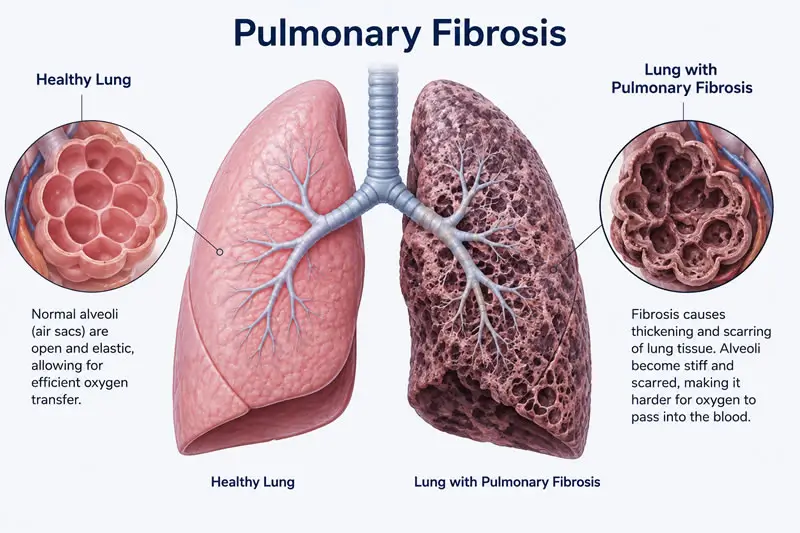
Pulmonary Fibrosis vs. Interstitial Lung Disease
Patients often hear the terms pulmonary fibrosis and interstitial lung disease (ILD) used together, but they do not mean exactly the same thing.
Interstitial lung disease refers to a large group of disorders affecting the tissue and spaces surrounding the air sacs of the lungs. Some interstitial lung diseases can cause inflammation, fibrosis, or both.
Pulmonary fibrosis specifically refers to scarring of lung tissue.
Because there are many different types and causes of ILD, an accurate diagnosis is important before determining a treatment strategy.
Treatment for Pulmonary Fibrosis
Treatment depends on the specific diagnosis, severity of disease, rate of progression, symptoms, oxygen levels, other medical conditions, and the suspected cause of lung fibrosis.
There is currently no single treatment appropriate for every patient with pulmonary fibrosis.
Depending on the diagnosis, management may involve:
- Medications appropriate for the specific type of pulmonary fibrosis or ILD
- Monitoring lung function
- Oxygen assessment and oxygen therapy when medically indicated
- Pulmonary rehabilitation
- Exercise and activity recommendations
- Vaccination and respiratory infection prevention
- Smoking cessation
- Management of contributing medical conditions
- Ongoing pulmonary function testing
- Monitoring with imaging when appropriate
- Referral for additional specialty evaluation when needed
The goal is to identify the specific condition whenever possible, manage symptoms and contributing factors, preserve lung function, and monitor the disease carefully over time.
Monitoring Pulmonary Fibrosis Over Time
Pulmonary fibrosis can behave differently from one patient to another. Some conditions remain relatively stable for extended periods, while others may progress.
Regular follow-up with a pulmonologist can help monitor changes in:
- Breathing symptoms
- Exercise tolerance
- Pulmonary function
- Oxygen saturation
- Imaging findings
- Medication response
- Overall functional ability
Changes in symptoms do not always correspond directly with changes in lung function, which is why objective testing can be an important part of ongoing care.
When Should You See a Pulmonologist?
Consider scheduling a pulmonary evaluation if you are experiencing:
- Persistent unexplained shortness of breath
- A chronic dry cough
- Increasing difficulty walking or exercising
- Abnormal findings on a chest X-ray or CT scan
- Unexplained low oxygen levels
- Declining pulmonary function test results
- A recent diagnosis of pulmonary fibrosis
- A diagnosis of interstitial lung disease
- Concerns about occupational or environmental lung exposure
You may also want a pulmonary consultation if imaging performed for another reason unexpectedly shows lung scarring or interstitial abnormalities.
Shortness of Breath and Pulmonary Fibrosis
Shortness of breath is one of the most common symptoms associated with pulmonary fibrosis, but it can have many possible causes.
Asthma, COPD, heart disease, pulmonary hypertension, anemia, deconditioning, and other respiratory conditions can also cause breathlessness.
If you are experiencing unexplained breathing difficulty, our Vienna pulmonary specialists can perform a comprehensive shortness of breath evaluation to help determine the underlying cause rather than assuming that symptoms are caused by one particular condition.
Pulmonary Fibrosis Care Conveniently Located in Vienna, VA
Our Vienna pulmonary office is conveniently located at 124 Park Street SE in Vienna, Virginia, near downtown Vienna and the Vienna Community Center.
The location provides convenient pulmonary care for patients from Vienna, Tysons, McLean, Oakton, Dunn Loring, Merrifield, Fairfax, Falls Church, and surrounding Fairfax County communities.
The office is easily accessible from major Northern Virginia routes, including Route 123 and I-66, making specialized pulmonary care available close to home.
Schedule a Pulmonary Fibrosis Evaluation in Vienna, VA
If you have been diagnosed with pulmonary fibrosis, have abnormal lung imaging, or are experiencing persistent shortness of breath or a chronic dry cough, schedule an evaluation with a pulmonologist at NOVA Pulmonary Critical Care and Sleep Associates in Vienna, VA.
Our pulmonary specialists can review your symptoms, previous testing and imaging and determine whether additional pulmonary evaluation or ongoing monitoring is appropriate.
NOVA Pulmonary Critical Care and Sleep Associates
124 Park Street SE, Suite 203
Vienna, VA 22180
Call 571-367-0000 to schedule an appointment with a Vienna pulmonologist.
Directions & Parking Information
Our Vienna office is located on Park Street SE near the Vienna Community Center and historic downtown Vienna.
Free parking available near the building
Elevator access to Suite 203
Easily accessible from Route 123 and I-66
Minutes from Tysons Corner
If you need assistance locating our office, please call and our staff will guide you.
Frequently Asked Questions About Pulmonary Fibrosis in Vienna, VA
- What is pulmonary fibrosis?
Pulmonary fibrosis is a condition in which lung tissue becomes scarred and stiff. This scarring can make it more difficult for the lungs to function normally and transfer oxygen into the bloodstream. Pulmonary fibrosis can occur for several reasons, and sometimes the underlying cause cannot be identified. - What are the common symptoms of pulmonary fibrosis?
Common symptoms include progressive shortness of breath, especially during physical activity, a persistent dry cough, fatigue, reduced exercise tolerance, and sometimes unexplained weight loss. Some patients may also develop clubbing or changes in the fingertips. - How is pulmonary fibrosis diagnosed?
Diagnosis may involve a detailed medical and occupational history, physical examination, pulmonary function testing, blood tests, and chest imaging such as high-resolution CT (HRCT). In certain cases, additional procedures may be needed to determine the type or cause of lung fibrosis. - Can I get evaluated for pulmonary fibrosis in Vienna, VA?
Yes. NOVA Pulmonary Critical Care and Sleep Associates provides pulmonary evaluation at its Vienna, Virginia office. Patients with unexplained shortness of breath, chronic cough, abnormal chest imaging, or an existing pulmonary fibrosis diagnosis can be evaluated by a pulmonologist. - What is the difference between pulmonary fibrosis and interstitial lung disease?
Interstitial lung disease (ILD) is a broad category of disorders affecting the tissue surrounding the air sacs in the lungs. Pulmonary fibrosis refers specifically to scarring of lung tissue. Some interstitial lung diseases cause pulmonary fibrosis, including idiopathic pulmonary fibrosis (IPF). - What is idiopathic pulmonary fibrosis (IPF)?
Idiopathic pulmonary fibrosis is a chronic lung disease that causes progressive scarring of lung tissue without an identifiable underlying cause. The rate of progression varies among patients, which makes ongoing pulmonary monitoring important. - Can pulmonary function testing help evaluate pulmonary fibrosis?
Yes. Pulmonary function tests can measure lung capacity and how efficiently gases move from the lungs into the bloodstream. They can help identify restrictive patterns associated with conditions such as pulmonary fibrosis and can also be used to monitor lung function over time. NOVA Pulmonary offers pulmonary function testing at its Vienna office. - How is pulmonary fibrosis treated?
Treatment depends on the specific type and cause of pulmonary fibrosis, disease severity, symptoms, lung function, and other health factors. Depending on the diagnosis, treatment may include medications, pulmonary rehabilitation, oxygen therapy when appropriate, management of contributing conditions, and regular monitoring. Certain antifibrotic medications are used for idiopathic pulmonary fibrosis.
Office Locations
Conveniently located near you in Dulles, Leesburg, (Loudoun County) and Vienna, (Fairfax County), VA
NOVA Pulmonary – Dulles
24430 Stone Springs Boulevard
Suite 550
Dulles, VA 20166
NOVA Pulmonary – Lansdowne
19415 Deerfield Avenue
Suite 301
Landsdowne, VA 20176
NOVA Pulmonary Critical Care and Sleep Associates is committed to providing excellent care in all aspects of Pulmonary Medicine and Sleep Disorders. With offices located in Lansdowne and Dulles, South Riding, we offer care for the entire Northern Virginia region, serving locations from Chantilly, Fairfax, Vienna, Centreville, Manassas, Gainesville to Reston, Sterling, Leesburg, Ashburn, Brambleton, Purcellville and more.
Meet the team at NOVA Pulmonary Critical Care and Sleep Associates

Dr. Aditya N Dubey, M.D, F.C.C.P. – Founder
Specialty:
Pulmonary, Critical Care and Sleep Medicine
Board Certified by American Board of Internal Medicine in the Subspecialities of Pulmonary Medicine, Critical Care Medicine and Sleep Medicine. Learn more about Dr. Dubey

Dr. Petra Thomas, M.D.
Specialty:
Pulmonary Medicine
Board Certified by American Board of Internal Medicine in the Subspecialities of Pulmonary Medicine. Learn more about Dr. Thomas

Dr. Esha Kapania, M.D.
Specialty:
Pulmonary Medicine
Board Certified by American Board of Internal Medicine in the Subspecialities of Pulmonary Medicine. Learn more about Dr. Kapania

Dr. Arman Murabia, M.D.
Specialty:
Pulmonary, Critical Care and Sleep Medicine
Board Certified by American Board of Internal Medicine in the Subspecialities of Pulmonary Medicine, Critical Care Medicine and Sleep Medicine. Learn more about Dr. Murabia

Dr. Zara Martirosyan, MD
Specialty:
Sleep Medicine & Internal Medicine Specialist
Board-certified physician in both Sleep medicine and Internal medicine. Learn more about Dr. Martirosyan

Rebekah Lee, AGNP-C, Lead APP
Nurse Practitioner. Learn more about Rebekah Lee

Paulos Abebe PA-C
Physician Assistant Learn more about Paulos Abebe PA-C

Katie Cameron, PA
Physician Assistant Learn more about Katie Cameron, PA-C