Pulmonary Function Tests (PFTs) are among the most valuable tools a pulmonologist uses to understand how well your lungs are working. If you’ve been experiencing a persistent cough, shortness of breath, wheezing, or symptoms related to Asthma, COPD, or other lung conditions, your physician may recommend a PFT as part of your evaluation.
At Nova Pulmonary and Sleep, patients throughout Vienna, Leesburg, South Riding, Ashburn, Broadlands, Brambleton, Fairfax, Tysons Corner, Chantilly, and Purcellville, VA receive comprehensive pulmonary testing to help diagnose lung conditions, monitor disease progression, and guide treatment decisions.
If you’ve never had a Pulmonary Function Test before, here’s exactly what you can expect.
What Is a Pulmonary Function Test?
A Pulmonary Function Test is a group of non-invasive breathing tests that measure:
- How much air your lungs can hold
- How quickly you can move air in and out
- How efficiently oxygen passes into your bloodstream
- Whether your airways are narrowed or obstructed
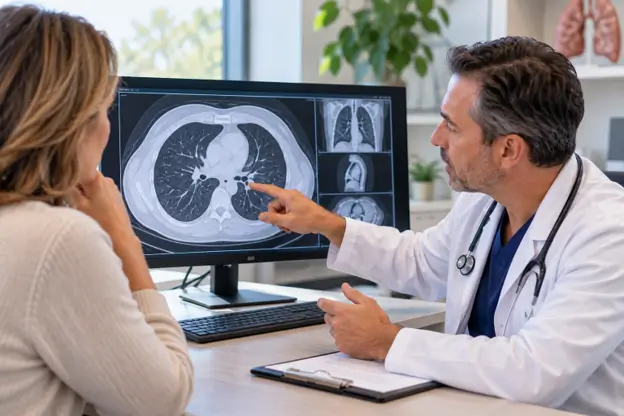
Unlike imaging studies such as chest X-rays or CT scans, PFTs evaluate how your lungs function, rather than how they look.
Your pulmonologist may recommend testing if you have:
- Persistent cough
- Shortness of breath
- Wheezing
- Asthma
- COPD
- Lung nodules
- Interstitial Lung Disease (ILD)
- History of smoking
- Pre-operative lung evaluation
- Monitoring after lung treatments
Why Your Doctor May Order a PFT
Pulmonary Function Tests help diagnose or monitor several respiratory conditions, including:
- Asthma
- COPD
- Chronic bronchitis
- Emphysema
- Pulmonary fibrosis
- Interstitial Lung Disease
- Occupational lung disease
- Lung damage from smoking
- Recovery after respiratory infections
They also help physicians determine whether breathing problems stem from lung disease or another condition affecting the heart or muscles.
Research published by the American Thoracic Society (ATS) emphasizes that standardized pulmonary function testing plays a central role in accurately diagnosing respiratory disorders and improving treatment decisions.
Preparing for Your Appointment
Most patients require very little preparation.
Your physician may recommend that you:
- Wear loose, comfortable clothing.
- Avoid smoking before your appointment.
- Avoid large meals immediately beforehand.
- Skip certain inhalers if instructed.
- Continue taking medications unless your doctor advises otherwise.
If you already use inhalers, bring them.
What Happens During the Test?
The testing process is painless and usually takes 30 to 60 minutes.
Step 1: Medical Review
A respiratory technician or physician reviews:
- Your symptoms
- Smoking history
- Current medications
- Previous lung conditions
- Height and weight
These details help interpret your results accurately.
Step 2: Nose Clip Placement
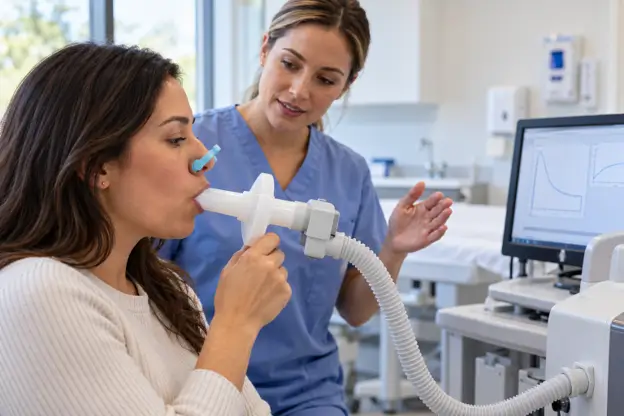
You’ll wear a soft nose clip.
This ensures you breathe through your mouth so measurements stay accurate.
Step 3: Breathing Into the Mouthpiece
You’ll place your lips tightly around a disposable mouthpiece connected to specialized equipment.
The technician will guide you through several breathing exercises.
These typically include:
- Normal breathing
- Deep inhalation
- Forceful exhalation
- Fast breathing
- Slow breathing
Some tests may be repeated several times to confirm consistency.
Step 4: Spirometry
Spirometry is the most common part of a PFT.
You’ll be asked to:
- Take the deepest breath possible.
- Blow out as hard and as long as you can.
- Continue exhaling until instructed to stop.
This measures:
- Forced Vital Capacity (FVC)
- Forced Expiratory Volume in one second (FEV1)
- Airflow obstruction
- Lung capacity
These values help diagnose conditions like Asthma and COPD.
Step 5: Bronchodilator Testing (If Needed)
If airway obstruction is detected, you may receive an inhaled bronchodilator.
After waiting approximately 15 minutes, spirometry is repeated.
Improvement after medication often suggests reversible airway narrowing, commonly seen in asthma.
According to Global Initiative for Asthma (GINA) recommendations, bronchodilator response testing remains an important component when evaluating suspected asthma.
Step 6: Lung Volume Testing
Your pulmonologist may also measure total lung volume.
This determines:
- Air trapping
- Hyperinflation
- Restrictive lung disease
These measurements help distinguish between different lung disorders.
Step 7: Diffusion Capacity (DLCO)
Another common portion of a PFT measures how efficiently oxygen passes from your lungs into your bloodstream.
You’ll inhale a harmless test gas, briefly hold your breath, then exhale.
This evaluation helps identify:
- Pulmonary fibrosis
- Emphysema
- Pulmonary vascular disease
- Certain lung injuries
Research published in the European Respiratory Journal has shown that diffusion capacity testing provides valuable information for evaluating several chronic lung diseases and monitoring disease progression.

Will the Test Hurt?
No.
Pulmonary Function Tests are considered very safe.
Some people experience:
- Mild dizziness
- Temporary coughing
- Short-lived shortness of breath after repeated forceful breathing
These symptoms usually resolve within minutes.
The technician monitors you throughout the procedure.
Understanding Your Results
After testing, your lung specialist reviews the findings.
Results are compared with expected values based on:
- Age
- Height
- Gender
- Ethnicity
Rather than looking at one number alone, physicians interpret multiple measurements together to understand overall lung function.
Your pulmonologist may identify:
- Normal lung function
- Obstructive disease
- Restrictive disease
- Reduced diffusion capacity
- Mixed patterns requiring additional evaluation
Sometimes further testing, imaging, or sleep evaluations may also be recommended.
Can a PFT Diagnose Sleep Disorders?
Not directly.
A Pulmonary Function Test evaluates lung performance not sleep quality.
However, patients who experience:
- Snoring
- Excessive daytime fatigue
- Sleep Apnea symptoms
- Nighttime breathing problems
may also benefit from evaluation by a Sleep specialist.
Because lung and sleep disorders often overlap, many patients receive both pulmonary and sleep evaluations depending on their symptoms.
Who Should Consider Pulmonary Function Testing?
Your physician may recommend testing if you have:
- Persistent cough lasting several weeks
- Frequent wheezing
- Shortness of breath with activity
- Smoking history
- Known Asthma
- COPD
- Lung Cancer concerns
- Lung nodules requiring evaluation
- Occupational exposure to dust or chemicals
- Unexplained breathing limitations
Early testing often helps identify problems before symptoms become severe.
Frequently Asked Questions
How Long Does a PFT take?
Most appointments last between 30 and 60 minutes.
Should I Stop Taking My Inhaler?
Only if your physician specifically instructs you to do so.
Is A PFT Safe?
Yes. Pulmonary Function Tests are non-invasive and generally very safe for most patients.
Will I Receive Results Immediately?
In many cases, preliminary results are available shortly after testing, but your pulmonologist will explain the complete interpretation during your follow-up.
Can A PFT Detect Lung Cancer?
No. PFTs evaluate lung function, not tumors. Imaging studies such as CT scans detect Lung Cancer or evaluate a lung nodule, although PFTs may help assess lung function before treatment.

Take the Next Step Toward Better Breathing
If you’ve had a persistent cough, wheezing, shortness of breath, symptoms of asthma or COPD, or concerns about your lung health, Pulmonary Function Testing can provide valuable answers.
At Nova Pulmonary and Sleep, our experienced pulmonologists and Sleep specialists provide comprehensive evaluations and personalized care for patients throughout Vienna, Leesburg, South Riding, Ashburn, Broadlands, Brambleton, Fairfax, Tysons Corner, Chantilly, and Purcellville, VA. Learn more or schedule an appointment by visiting http://www.novapulmonary.com.