
A cough is one of the most common reasons adults visit a doctor. In many cases, it’s linked to a cold, seasonal allergies, or temporary irritation. But when a cough lingers for weeks or keeps coming back, it may be a sign of something more serious.
For adults in Vienna, Leesburg, Ashburn, Fairfax, and surrounding Northern Virginia communities, knowing when to seek care from a pulmonologist or sleep specialist can make a meaningful difference. A chronic cough is not a diagnosis. It is a symptom. And sometimes, it points to an underlying lung or sleep-related condition that needs evaluation.
At Nova Pulmonary and Sleep, patients are assessed carefully to determine whether a persistent cough is related to asthma, COPD, lung nodules, sleep apnea, or another lung disorder.
What Is Considered a Chronic Cough?
According to the American College of Chest Physicians (ACCP), a cough lasting more than eight weeks in adults is classified as chronic. Subacute coughs last three to eight weeks, and acute coughs last fewer than three weeks.
While many chronic coughs are related to common causes such as postnasal drip or acid reflux, studies show that underlying lung disease is a frequent contributor. Research published in the journal Chest indicates that the most common causes of chronic cough in adults include:
- Asthma
- Chronic obstructive pulmonary disease (COPD)
- Gastroesophageal reflux disease (GERD)
- Upper airway cough syndrome
However, more serious conditions must also be ruled out, especially if the cough is accompanied by shortness of breath, weight loss, fatigue, or blood in the sputum.
Asthma: A Common but Often Overlooked Cause
Asthma does not always present with wheezing. In some individuals, the primary symptom is cough, known as cough-variant asthma.
The Centers for Disease Control and Prevention (CDC) estimates that more than 25 million Americans have asthma. In adults, symptoms may include:
- Persistent dry cough
- Shortness of breath
- Chest tightness
- Symptoms that worsen at night
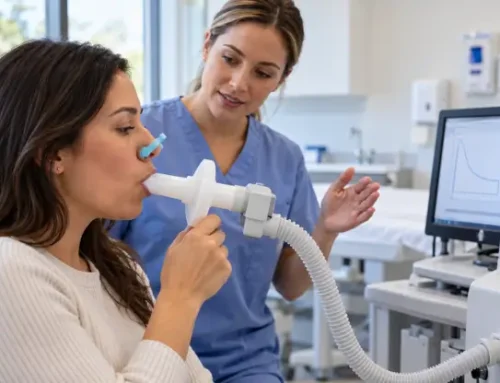
If untreated, asthma can lead to progressive airway inflammation. Evaluation by a lung specialist often includes pulmonary function testing to assess airflow and determine whether airway obstruction is reversible.
Residents in areas like South Riding, Broadlands, and Brambleton may experience seasonal triggers that worsen asthma symptoms, making proper diagnosis and management important.
COPD: When Smoking or Environmental Exposure Plays a Role
Chronic obstructive pulmonary disease (COPD) is another leading cause of chronic cough. According to the National Heart, Lung, and Blood Institute (NHLBI), COPD affects more than 16 million Americans, with many more undiagnosed.
COPD typically includes:
- Chronic cough with mucus production
- Shortness of breath, especially with activity
- Frequent respiratory infections
Smoking remains the primary risk factor. However, long-term exposure to air pollutants, workplace dust, or secondhand smoke can also contribute to it.
A chronic cough in someone with a history of smoking should always be evaluated. Early diagnosis can improve quality of life and slow disease progression.
Could It Be Lung Cancer or a Lung Nodule?
While less common, lung cancer remains a critical condition to rule out in patients with a chronic cough, particularly those over age 50 with a smoking history.
The American Cancer Society notes that lung cancer is the leading cause of cancer-related deaths in the United States. Early-stage lung cancer may not cause noticeable symptoms, but warning signs can include:
- Persistent cough
- Coughing up blood
- Chest pain
- Unexplained weight loss
Sometimes imaging reveals a lung nodule, which is a small spot in the lung seen on a chest CT scan. Most lung nodules are benign, especially in non-smokers. However, appropriate evaluation and monitoring are essential to determine whether further testing is needed.
A pulmonologist carefully reviews imaging and may recommend follow-up scans based on established guidelines, such as those from the Fleischner Society.

Interstitial Lung Disease (ILD): A Less Common but Serious Cause
Interstitial lung disease (ILD) refers to a group of disorders that cause inflammation and scarring of lung tissue. A chronic dry cough and progressive shortness of breath are common early signs.
Although ILD is less common than asthma or COPD, delayed diagnosis can lead to irreversible lung damage. Early evaluation allows for appropriate management and referral if necessary.
Sleep Apnea and Chronic Cough: Is There a Connection?
It may seem surprising, but obstructive sleep apnea (OSA) can contribute to chronic cough in some patients.
Sleep apnea is characterized by repeated pauses in breathing during sleep. The American Academy of Sleep Medicine estimates that nearly 30 million adults in the U.S. have sleep apnea, though many remain undiagnosed.
How can sleep apnea relate to cough?
- Repeated airway collapse can cause irritation of the throat.
- OSA is associated with acid reflux, which can trigger cough.
- Snoring and airway vibration may lead to inflammation.
Patients who experience loud snoring, daytime fatigue, and chronic cough, especially those in Tysons Corner, Chantilly, or Purcellville, may benefit from evaluation by a sleep specialist.
Treating sleep apnea can sometimes reduce persistent cough symptoms.
When to See a Pulmonologist
A cough should be evaluated promptly if it is accompanied by:
- Shortness of breath
- Chest pain
- Coughing up blood
- Unexplained weight loss
- Fever lasting more than a few days
Even without these warning signs, a cough lasting more than eight weeks warrants further evaluation.
A pulmonologist specializes in diagnosing lung disorders, including asthma, COPD, ILD, lung nodules, and lung cancer. Diagnostic tools may include:
- Pulmonary function tests
- Chest X-rays or CT scans
- Sleep studies
- Oxygen testing
Early evaluation improves the likelihood of identifying treatable conditions before complications develop.
The Importance of Smoking Cessation
If you smoke and have a chronic cough, quitting smoking is one of the most important steps you can take for your lung health.
The U.S. Surgeon General reports that smoking cessation reduces the risk of lung cancer, COPD progression, and cardiovascular disease. Even long-term smokers experience measurable benefits after quitting.
A lung specialist can provide support and guidance tailored to your health status.
Why Early Evaluation Matters
Persistent cough is sometimes dismissed as “just allergies” or “just a cold.” However, research consistently shows that delayed diagnosis of lung disease can lead to worse outcomes.
Early detection allows for:
- Targeted treatment
- Slower disease progression
- Better symptom control
- Improved quality of life
For residents of Vienna, VA, Ashburn, VA, Leesburg, VA, Fairfax, VA, and nearby communities, access to a board-certified pulmonologist and sleep specialist offers the opportunity for comprehensive evaluation in a single setting.

Take Persistent Cough Seriously
A chronic cough may be harmless, but it may also be an early sign of asthma, COPD, sleep apnea, or even lung cancer. The key is not to ignore persistent symptoms.
If you are experiencing a cough lasting more than eight weeks, shortness of breath, snoring with daytime fatigue, or concerns about a lung nodule, evaluation by a specialist can provide clarity.
Schedule an Evaluation with Nova Pulmonary and Sleep
If you live in Vienna, Leesburg, South Riding, Ashburn, Broadlands, Brambleton, Fairfax, Tysons Corner, Chantilly, or Purcellville, expert care is available nearby.
Visit http://www.novapulmonary.com to learn more about comprehensive pulmonary and sleep services or to request an appointment.
Your lungs and sleep health deserve careful attention.