
When breathing becomes harder over time without a clear reason, it can be unsettling. A lingering cough, worsening shortness of breath, or abnormal imaging findings may indicate a complex group of conditions known as interstitial lung diseases (ILDs). Early evaluation by a qualified pulmonologist can make a meaningful difference in diagnosis, treatment planning, and long-term outcomes.
At Nova Pulmonary and Sleep, patients in Vienna, VA, Leesburg, VA, South Riding, VA, Ashburn, VA, Broadlands, VA, Brambleton, VA, Fairfax, VA, Tysons Corner, VA, Chantilly, VA, and Purcellville, VA receive a comprehensive evaluation for lung disorders and sleep-related conditions from a board-certified lung specialist and Sleep specialist. This article explains how pulmonologists diagnose and treat interstitial lung diseases, and why timely care matters.
What Are Interstitial Lung Diseases?
Interstitial lung diseases are a group of more than 200 disorders that cause inflammation and scarring (fibrosis) of the lung tissue. The “interstitium” refers to the network of tissue surrounding the air sacs (alveoli). When this tissue becomes inflamed or scarred, oxygen has difficulty passing into the bloodstream.
Common types of ILD include:
- Idiopathic pulmonary fibrosis (IPF)
- Hypersensitivity pneumonitis
- Sarcoidosis
- Connective tissue disease–associated ILD
- Occupational or environmental exposure-related lung disease
According to the American Thoracic Society (ATS), ILDs vary widely in cause and severity, making careful evaluation essential. Some forms progress slowly, while others worsen more rapidly.
Common Symptoms That Prompt Evaluation
Patients often seek care for:
- Progressive shortness of breath
- Persistent dry cough
- Fatigue
- Chest discomfort
- Reduced exercise tolerance
These symptoms may overlap with those of other conditions, such as Asthma, COPD, or even heart disease. That’s why evaluation by a pulmonologist is important when symptoms persist or imaging shows abnormalities.
Step 1: A Detailed Medical History and Exposure Review
Diagnosis begins with listening.
A pulmonologist will ask about:
- Duration and pattern of symptoms
- Smoking history
- Occupational exposures (dust, chemicals, mold)
- Environmental exposures (birds, hot tubs, farming)
- Family history of lung disease
- Autoimmune conditions
Smoking remains a significant risk factor for multiple lung diseases, including ILD and Lung Cancer. If smoking is present, smoking cessation counseling may be part of the care plan.
Step 2: Physical Examination
During the exam, a lung specialist listens for abnormal lung sounds, such as fine crackles, sometimes described as “Velcro-like.” Clubbing of the fingers may also be observed in some patients with chronic lung disease.
While physical findings alone cannot confirm ILD, they help guide further testing.
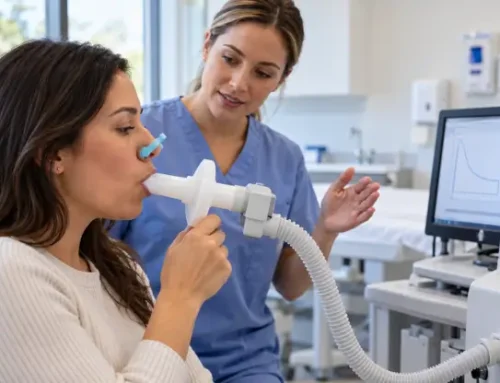
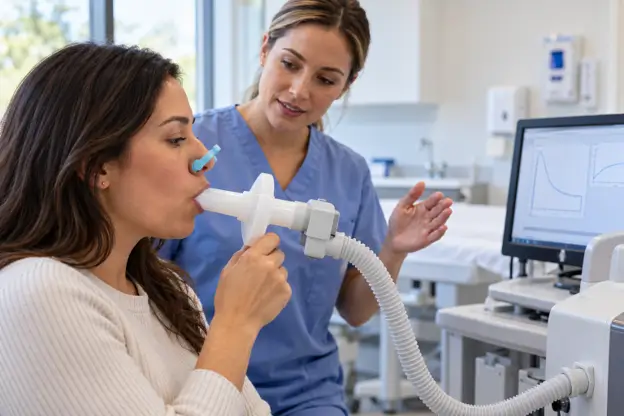
Step 3: Pulmonary Function Testing (PFTs)
Pulmonary function tests measure how well the lungs are working.
These tests evaluate:
- Lung volume
- Airflow
- Gas exchange capacity
In ILD, PFTs often show a restrictive pattern, meaning the lungs cannot fully expand. The diffusion capacity (DLCO) test assesses how well oxygen passes into the bloodstream and is often reduced in ILD.
Pulmonary function testing is non-invasive and provides objective data to monitor disease progression over time.
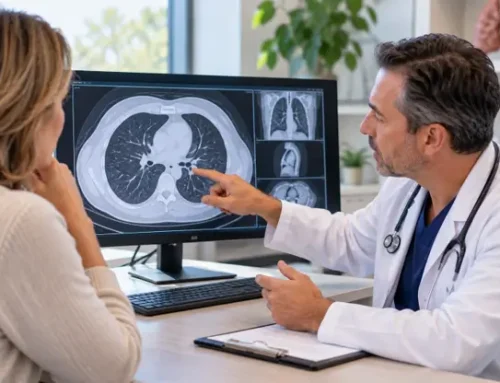
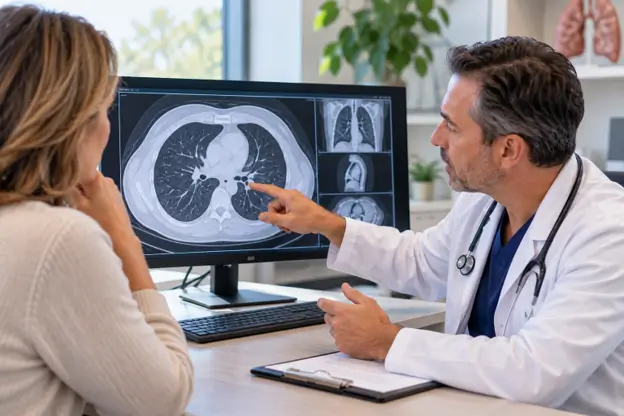
Step 4: High-Resolution CT (HRCT) Imaging
High-resolution computed tomography (HRCT) of the chest is one of the most important diagnostic tools in ILD.
HRCT provides detailed images that can:
- Identify patterns of fibrosis
- Detect inflammation
- Differentiate between ILD types
- Identify Lung nodule findings that may require additional evaluation
Certain patterns, such as usual interstitial pneumonia (UIP), can sometimes allow a confident diagnosis without invasive procedures.
The American College of Radiology supports HRCT as a key diagnostic step when ILD is suspected.
Step 5: Laboratory and Autoimmune Testing
Because some ILDs are linked to autoimmune conditions, blood tests may be ordered to look for:
- Rheumatoid arthritis
- Systemic sclerosis
- Lupus
- Myositis
Identifying an underlying autoimmune cause helps guide targeted treatment.
Step 6: Bronchoscopy or Lung Biopsy (If Needed)
In select cases, further tissue sampling may be necessary.
A bronchoscopy allows a pulmonologist to collect fluid or small tissue samples. In more complex cases, a surgical lung biopsy may be recommended.
A biopsy is not required for all patients. Decisions are made based on imaging findings, clinical presentation, and multidisciplinary discussion.

The Role of Multidisciplinary Care
Many ILD diagnoses benefit from collaboration between pulmonologists, radiologists, and pathologists.
Studies published in the American Journal of Respiratory and Critical Care Medicine suggest that multidisciplinary discussion improves diagnostic accuracy in ILD cases. This approach helps ensure appropriate treatment decisions.
Treatment Options for Interstitial Lung Disease
Treatment depends on the specific type of ILD and its severity.
-
Anti-Fibrotic Medications
For idiopathic pulmonary fibrosis, medications such as nintedanib and pirfenidone have been shown in clinical trials to slow disease progression.
These medications do not cure the disease but may reduce the rate of lung function decline.
-
Anti-Inflammatory or Immunosuppressive Therapy
In ILDs caused by autoimmune disease or inflammation, corticosteroids or other immunosuppressive medications may be used.
Treatment decisions are individualized and based on balancing potential benefits and side effects.
-
Oxygen Therapy
If oxygen levels are low, supplemental oxygen may improve symptoms and quality of life.
-
Pulmonary Rehabilitation
Pulmonary rehabilitation programs combine supervised exercise, breathing techniques, and education. Research shows pulmonary rehabilitation improves exercise tolerance and reduces symptoms in many chronic lung diseases.
-
Managing Related Conditions
Many patients with ILD also have:
- Sleep Apnea
- Snoring
- COPD
- Asthma
- Chronic cough
Sleep-disordered breathing can worsen oxygen levels at night. Evaluation by a Sleep specialist may include sleep studies and treatment such as CPAP therapy.
Addressing sleep apnea may improve overall respiratory function and reduce cardiovascular risk.
-
Monitoring for Lung Cancer and Nodules
Patients with underlying lung scarring may require monitoring for Lung Cancer or new lung nodules.
Early detection through imaging surveillance can improve outcomes.
When to See a Pulmonologist
You should consider seeing a pulmonologist if you experience:
- Persistent shortness of breath
- Chronic cough
- Abnormal chest imaging
- Unexplained fatigue with breathing difficulty
- History of occupational lung exposure
Early evaluation can prevent delayed diagnosis and allow more treatment options.
Residents in Vienna, VA, Leesburg, VA, South Riding, VA, Ashburn, VA, Broadlands, VA, Brambleton, VA, Fairfax, VA, Tysons Corner, VA, Chantilly, VA, and Purcellville, VA have access to comprehensive lung and sleep care locally.
The Importance of Early Diagnosis
ILDs can progress silently. Studies from the National Institutes of Health suggest that earlier diagnosis is associated with better symptom management and improved quality of life.
While not all forms are reversible, timely treatment may slow progression and reduce complications.
Preventive Strategies
Although not all ILDs are preventable, risk reduction includes:
- Smoking cessation
- Avoiding occupational lung exposures
- Vaccinations (influenza and pneumonia)
- Managing underlying autoimmune conditions
- Monitoring chronic respiratory symptoms
If you smoke, quitting is one of the most effective steps to protect lung health.
Comprehensive Lung and Sleep Care in Northern Virginia
Interstitial lung diseases require thoughtful evaluation, accurate diagnosis, and individualized treatment planning. Because symptoms often overlap with asthma, COPD, chronic cough, or sleep disorders, working with a trained lung specialist ensures a structured and evidence-based approach.
At Nova Pulmonary and Sleep, patients receive evaluation for ILD, Asthma, COPD, Lung Cancer screening, Lung nodule monitoring, Sleep Apnea, snoring, and other respiratory concerns.

Schedule Your Lung Evaluation Today
If you are experiencing shortness of breath, chronic cough, or abnormal imaging findings, early evaluation can make a meaningful difference.
Nova Pulmonary and Sleep provides comprehensive care for lung disorders and sleep conditions throughout Northern Virginia, including Vienna, VA, Ashburn, VA, Fairfax, VA, and surrounding communities.
To learn more or request an appointment, visit http://www.novapulmonary.com and take the first step toward clearer breathing and better sleep.