A phone call saying your chest CT was “abnormal” can feel overwhelming. However, an abnormal result does not automatically mean you have lung cancer or another serious disease. Chest CT scans are highly detailed, so they often detect small changes that require further evaluation but may ultimately prove harmless.
At Nova Pulmonary and Sleep, patients throughout Vienna, Leesburg, South Riding, Ashburn, Broadlands, Brambleton, Fairfax, Tysons Corner, Chantilly, and Purcellville, VA receive comprehensive evaluations from experienced pulmonologists who help determine what abnormal findings mean and the most appropriate next steps.
What Does an Abnormal Chest CT Mean?
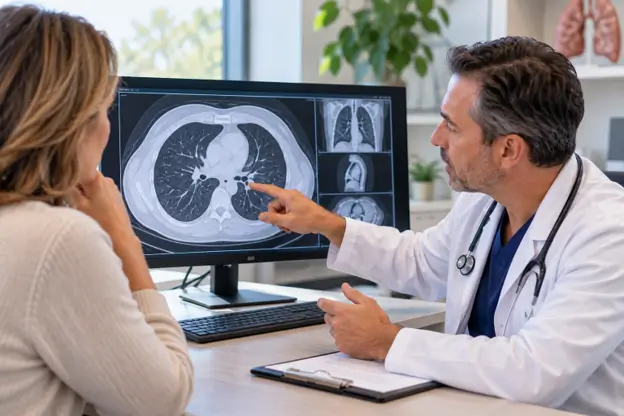
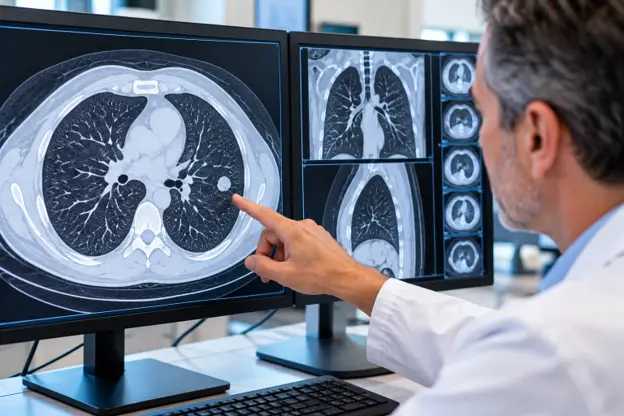
A chest CT (computed tomography) creates detailed images of your lungs, airways, heart, and surrounding structures. Radiologists may describe a scan as abnormal when they identify something that differs from what is typically expected.
Common findings include:
- Lung nodules
- Areas of inflammation
- Scarring
- Enlarged lymph nodes
- Fluid around the lungs
- Signs of infection
- Airway abnormalities
- Evidence of COPD or emphysema
- Interstitial lung disease (ILD)
Many abnormalities are unrelated to cancer. Previous infections, old injuries, smoking-related changes, autoimmune diseases, and even normal aging can all produce findings that deserve follow-up.
Why Additional Testing Is Sometimes Needed
CT imaging provides excellent detail, but it cannot always determine exactly what a finding represents.
Your pulmonologist considers several factors, including:
- Your age
- Smoking history
- Family history
- Symptoms
- Previous imaging
- Medical conditions
- Size and appearance of the abnormality
Research published by the Fleischner Society has established evidence-based recommendations for managing incidentally detected pulmonary nodules, helping physicians determine when surveillance imaging alone is appropriate and when additional testing is warranted.
Common Findings and What They May Mean
Lung Nodules
A lung nodule is one of the most common abnormal CT findings.
Most lung nodules are:
- Small
- Benign
- Caused by previous infections
- Stable over time
Certain characteristics may increase concern, including:
- Larger size
- Irregular borders
- Growth on repeat imaging
- Multiple risk factors for lung cancer
Many patients simply require another CT scan several months later to ensure the nodule has not changed.
Areas of Scarring
Scar tissue can develop after:
- Pneumonia
- COVID-19
- Tuberculosis
- Occupational exposures
- Autoimmune diseases
Scarring may remain stable for years, although some patients require monitoring if interstitial lung disease is suspected.
Signs of COPD or Emphysema
Even before breathing symptoms become severe, CT imaging may show evidence of emphysema or chronic obstructive pulmonary disease (COPD).
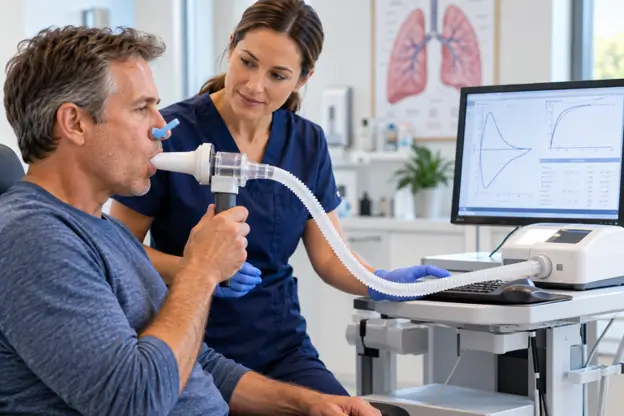
A pulmonologist may recommend pulmonary function testing to better understand how well your lungs are working and whether treatment could improve symptoms such as cough or shortness of breath.
Ground-Glass Opacities
Ground-glass opacities appear as hazy areas on CT imaging.
Possible causes include:
- Viral infections
- Inflammation
- Early interstitial lung disease
- Autoimmune disorders
- Certain lung cancers
These findings often require correlation with symptoms and, in some cases, repeat imaging.
What Happens During Your Pulmonology Visit?
Your first appointment focuses on understanding the complete clinical picture rather than relying solely on imaging.
Your physician may:
- Review your CT images
- Discuss your symptoms
- Evaluate your medical history
- Review medications
- Perform a physical examination
- Assess environmental or occupational exposures
- Discuss smoking history
Having access to previous chest X-rays or CT scans is especially helpful because stability over several years often suggests a benign process.
Additional Tests You May Need
Not everyone requires more testing, but depending on your CT findings, your pulmonologist may recommend one or more of the following.
Repeat Chest CT
For many small lung nodules, the safest approach is careful monitoring.
Repeat imaging helps determine whether the finding:
- Remains unchanged
- Resolves
- Continues to grow
Stable findings over time are often reassuring.
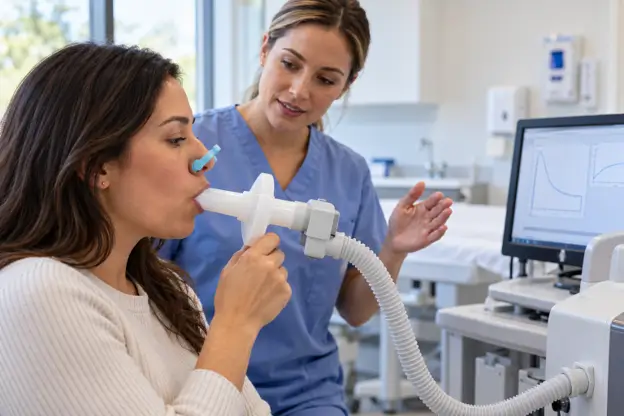
Pulmonary Function Testing
These breathing tests evaluate:
- Lung capacity
- Airflow
- Oxygen exchange
They are especially useful if COPD, asthma, or interstitial lung disease is suspected.
Research from the American Thoracic Society and European Respiratory Society supports standardized pulmonary function testing as an essential component in diagnosing and monitoring chronic lung diseases.
PET Scan
A PET scan evaluates metabolic activity.
It may be recommended when:
- A lung nodule is larger
- Cancer risk is higher
- Additional information is needed before biopsy
PET scans cannot diagnose cancer on their own but help guide decision-making.
Bronchoscopy
Bronchoscopy allows your lung specialist to examine the airways using a thin, flexible camera.
During the procedure, your physician may:
- Collect tissue samples
- Obtain cultures
- Evaluate abnormal airways
- Investigate persistent cough
- Assess unexplained lung abnormalities
CT-Guided Biopsy
If tissue is needed from a suspicious area, a CT-guided needle biopsy may provide a diagnosis without surgery.
Your physician will discuss the benefits and risks before recommending this procedure.
When Is Surgery Necessary?
Most abnormal CT findings never require surgery.
Surgical consultation may be considered if:
- Cancer is strongly suspected
- A biopsy cannot provide adequate tissue
- A concerning lesion continues to grow
- Removal offers the best treatment option
Whenever possible, physicians first use less invasive methods to diagnose the condition.
Should You Be Worried About Lung Cancer?
It is natural to worry, but many abnormal CT scans do not indicate cancer.
Factors that increase risk include:
- Smoking history
- Older age
- Family history
- Previous cancer
- Exposure to asbestos or radon
- Larger or enlarging lung nodules
The National Lung Screening Trial (NLST) demonstrated that low-dose CT screening among high-risk individuals significantly reduced lung cancer mortality through earlier detection, highlighting the importance of timely evaluation rather than assuming the worst.
When Should You See a Pulmonologist?
You should consider scheduling an evaluation if your CT scan shows:
- Lung nodule
- Persistent infiltrate
- Enlarged lymph nodes
- Lung scarring
- COPD or emphysema
- Interstitial lung disease
- Recurrent pneumonia
- Unexplained abnormalities
You should also seek evaluation if you experience:
- Persistent cough
- Shortness of breath
- Wheezing
- Chest discomfort
- Coughing up blood
- Unexplained weight loss
Early assessment often provides reassurance while ensuring that potentially serious conditions are identified promptly.
Frequently Asked Questions
Does An Abnormal Chest CT Always Mean Cancer?
No. Many abnormal findings are related to infections, inflammation, scarring, or other non-cancerous conditions.
How Long Does Follow-Up Usually Take?
The timeline depends on the finding. Some patients need repeat imaging in three months, while others may simply return in one year.
Can Lung Nodules Disappear?
Yes. Nodules caused by infection or inflammation sometimes resolve on their own after treatment or over time.
Should I Get A Second Opinion?
If you are uncertain about your diagnosis or recommended treatment, discussing your case with an experienced lung specialist can provide additional clarity.
Partner with Experienced Lung Specialists
An abnormal chest CT is the beginning of an evaluation, not necessarily a diagnosis. Careful interpretation, appropriate follow-up, and individualized recommendations are essential to determining what your imaging findings mean.
If you’ve recently had an abnormal chest CT or have been referred for evaluation of a lung nodule, COPD, asthma, persistent cough, shortness of breath, or another lung condition, the experienced team at Nova Pulmonary and Sleep is here to help.
Serving patients throughout Vienna, Leesburg, South Riding, Ashburn, Broadlands, Brambleton, Fairfax, Tysons Corner, Chantilly, and Purcellville, VA, their pulmonologists provide comprehensive, evidence-based care. Learn more or schedule an appointment at http://www.novapulmonary.com.