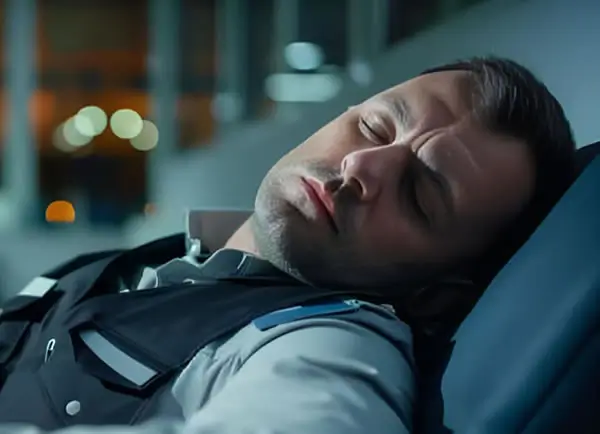
What is Shif Shift Work Sleep Disorder (SWSD)?
Work Sleep Disorder (SWSD) is a condition that affects people who work non-traditional hours, such as night shifts or rotating shifts. It is characterized by difficulties in sleeping and staying awake due to the misalignment between the body’s internal circadian rhythm and the external work schedule. This misalignment can lead to significant sleep disturbances and related health problems.
Key Features:
- Sleep Difficulties: Individuals with SWSD often struggle to fall asleep or stay asleep during their off hours. For example, someone who works a night shift might have trouble sleeping during the day.
- Excessive Daytime Sleepiness: Even after a full shift, individuals may feel excessively sleepy during the day, which can impact their alertness and performance.
- Poor Sleep Quality: The quality of sleep can be affected, with issues such as fragmented sleep or difficulty reaching deep, restorative sleep stages.
- Health Problems: SWSD can contribute to various health issues, including mood disorders, gastrointestinal problems, cardiovascular issues, and metabolic disturbances.
Symptoms:
- Difficulty Sleeping: Trouble falling asleep or staying asleep when attempting to rest during non-traditional hours.
- Daytime Sleepiness: Persistent fatigue or drowsiness during waking hours.
- Reduced Performance: Impaired cognitive and physical performance due to lack of restful sleep.
- Mood Changes: Irritability, stress, or depressive symptoms related to disrupted sleep patterns.
Causes:
- Circadian Rhythm Disruption: The body’s internal clock (circadian rhythm) is disrupted by the non-traditional work schedule, leading to a misalignment between the internal sleep-wake cycle and the external environment.
- Irregular Work Hours: Frequent changes in shift patterns or working hours can exacerbate the disruption to the sleep-wake cycle.
Diagnosis:
- Sleep History: Assessment of sleep patterns and work schedules to understand the extent of disruption.
- Sleep Diaries: Keeping a detailed record of sleep habits, work schedules, and symptoms.
- Actigraphy: Using a wrist-worn device to monitor sleep and activity patterns over time.
- Polysomnography: In some cases, a sleep study might be conducted to rule out other sleep disorders.
Treatment:
- Sleep Schedule Management: Attempting to maintain a consistent sleep schedule as much as possible, even on days off.
- Light Therapy: Exposure to bright light at the appropriate times can help reset the internal clock and improve sleep quality. Morning light exposure can help those with night shifts, while evening light may benefit those with early morning shifts.
- Melatonin: Melatonin supplements taken before the desired sleep time can help adjust the body’s internal clock, but should be used under medical supervision.
- Sleep Environment: Creating a conducive sleep environment, such as darkening the room, using white noise, and ensuring it is cool and quiet, can help improve sleep quality.
- Cognitive Behavioral Therapy for Insomnia (CBT-I): This therapy can address any cognitive or behavioral issues contributing to sleep problems.
- Shift Work Strategies: For those with rotating shifts, gradually shifting sleep times and using strategic naps can help manage sleep needs.
- Health and Lifestyle Adjustments: Maintaining good general health practices, such as regular exercise, a balanced diet, and stress management techniques, can also help mitigate some of the negative effects of shift work.
Managing SWSD often involves a combination of these strategies and should be tailored to individual needs and schedules. Consulting a healthcare professional or sleep specialist can provide personalized advice and treatment options.
Shift Work Sleep Disorder (SWSD) FAQs
What is Shift Work Sleep Disorder (SWSD)?
Shift Work Sleep Disorder (SWSD) is a circadian rhythm sleep disorder that affects people who work nontraditional hours, such as night shifts, rotating shifts, or early morning schedules. It disrupts the body’s natural sleep-wake cycle, leading to insomnia, excessive sleepiness, and fatigue.
What causes Shift Work Sleep Disorder?
SWSD is caused by a misalignment between your internal biological clock and your work schedule. The body is naturally programmed to sleep at night and stay awake during the day, so working overnight or irregular hours can interfere with normal sleep patterns.
What are the symptoms of SWSD?
Common symptoms include:
- Difficulty falling asleep or staying asleep
- Excessive daytime sleepiness
- Lack of energy
- Poor concentration
- Irritability or mood changes
- Increased risk of workplace or driving accidents
Who is most at risk for SWSD?
Individuals who frequently work:
- Night shifts
- Rotating shifts
- Early morning shifts
Healthcare workers, first responders, factory workers, and transportation employees are especially at risk.
How is Shift Work Sleep Disorder diagnosed?
A sleep specialist at NOVA Pulmonary may diagnose SWSD through:
- A detailed sleep history
- Sleep diaries
- Actigraphy (wearable sleep tracking devices)
- In some cases, an overnight sleep study
Can Shift Work Sleep Disorder be treated?
Yes, SWSD is treatable. Treatment options may include:
- Adjusting sleep schedules
- Light therapy to regulate circadian rhythms
- Behavioral therapy
- Strategic use of naps
- Medications to promote wakefulness or sleep when appropriate
How does light therapy help with SWSD?
Light therapy uses exposure to bright light at specific times to help reset your internal clock. It can improve alertness during work hours and help you sleep better during the day.
Are there medications for SWSD?
Yes. In some cases, doctors may prescribe medications to help with wakefulness during shifts or improve sleep during rest periods. These are carefully managed by sleep specialists at NOVA Pulmonary.
Can lifestyle changes improve SWSD symptoms?
Absolutely. Helpful strategies include:
- Keeping a consistent sleep schedule (even on days off)
- Creating a dark, quiet sleep environment
- Avoiding caffeine and alcohol before bedtime
- Using blackout curtains or sleep masks
Is Shift Work Sleep Disorder dangerous?
If left untreated, SWSD can increase the risk of:
- Workplace accidents
- Car accidents due to drowsy driving
- Chronic health issues such as heart disease and depression
When should I see a doctor for SWSD?
You should consult a sleep specialist at NOVA Pulmonary if you:
- Consistently struggle to sleep or stay awake
- Feel excessively tired despite adequate sleep time
- Experience performance issues at work due to fatigue
Can SWSD go away on its own?
SWSD typically persists as long as irregular work schedules continue. However, proper treatment and management can significantly reduce symptoms and improve quality of life.
Office Locations
Conveniently located near you in Dulles, Leesburg, (Loudoun County) and Vienna, (Fairfax County), VA
NOVA Pulmonary – Dulles
24430 Stone Springs Boulevard
Suite 550
Dulles, VA 20166
NOVA Pulmonary – Lansdowne
19415 Deerfield Avenue
Suite 301
Lansdowne, VA 20176
Meet the team at NOVA Pulmonary Critical Care and Sleep Associates

Dr. Aditya N Dubey, M.D, F.C.C.P. – Founder
Specialty:
Pulmonary, Critical Care and Sleep Medicine
Board Certified by American Board of Internal Medicine in the Subspecialities of Pulmonary Medicine, Critical Care Medicine and Sleep Medicine. Learn more about Dr. Dubey

Dr. Petra Thomas, M.D.
Specialty:
Pulmonary Medicine
Board Certified by American Board of Internal Medicine in the Subspecialities of Pulmonary Medicine. Learn more about Dr. Thomas

Dr. Esha Kapania, M.D.
Specialty:
Pulmonary Medicine
Board Certified by American Board of Internal Medicine in the Subspecialities of Pulmonary Medicine. Learn more about Dr. Kapania

Dr. Arman Murabia, M.D.
Specialty:
Pulmonary, Critical Care and Sleep Medicine
Board Certified by American Board of Internal Medicine in the Subspecialities of Pulmonary Medicine, Critical Care Medicine and Sleep Medicine. Learn more about Dr. Murabia

Dr. Zara Martirosyan, MD
Specialty:
Sleep Medicine & Internal Medicine Specialist
Board-certified physician in both Sleep medicine and Internal medicine. Learn more about Dr. Martirosyan

Rebekah Lee, AGNP-C, Lead APP
Nurse Practitioner. Learn more about Rebekah Lee

Paulos Abebe PA-C
Physician Assistant Learn more about Paulos Abebe PA-C

Katie Cameron, PA
Physician Assistant Learn more about Katie Cameron, PA-C